Max Planck Institute of Microstructure Physics, Halle (Saale)
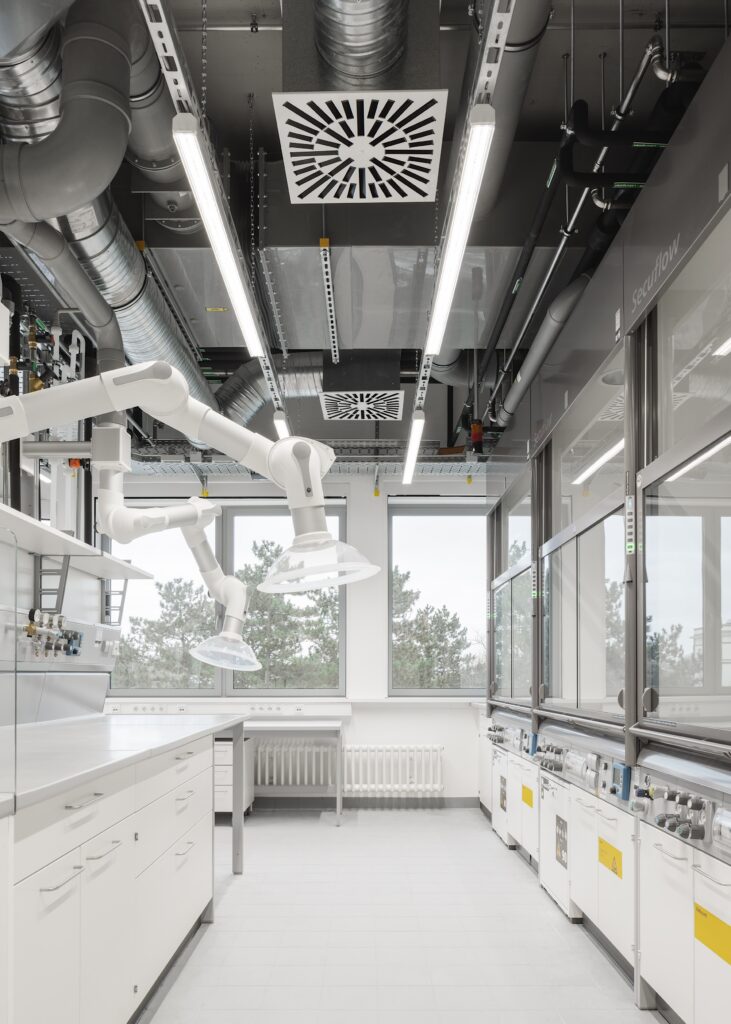
The Max Planck Society is among the most renowned research institutions worldwide. To date, its 84 institutes, dedicated to basic research in the natural, social, and humanities sciences, have received 31 Nobel Prizes. One of these institutes is in Halle (Saale): the Max Planck Institute (MPI) for Microstructure Physics, where researchers investigate materials science and solid‑state physics. Their work includes examining the surfaces and interfaces of semiconductors, insulators, and metals. Established in 1992, it was the first MPI in the new federal states. After nearly three decades, the decision was made in 2020 to construct an extension. Additional laboratories, office spaces, and a large cleanroom now ensure that excellent research is supported by optimal spatial conditions and sufficient room for growth.
Max Planck Society, Munich
2019–2025
Building planning
Schnepp Renou
Research & Education
Berlin, Deutschland
In Excellent Company
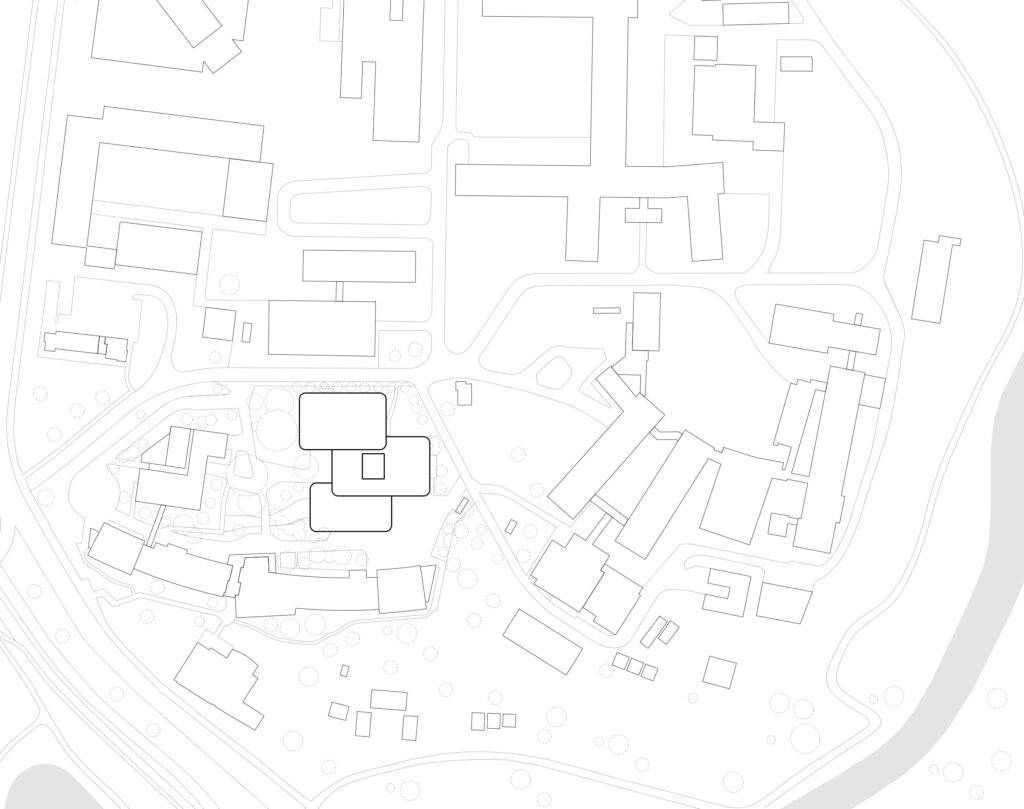
Surrounded by trees, the campus of the MPI for Microstructure Physics is situated on the so‑called Weinberg in the northwest of Halle, close to the Wilde Saale River. It forms part of an extensive scientific district that brings together institutes of the Fraunhofer Society, the Leibniz and Helmholtz Associations, as well as Martin Luther University Halle.
Urban Context and Topography
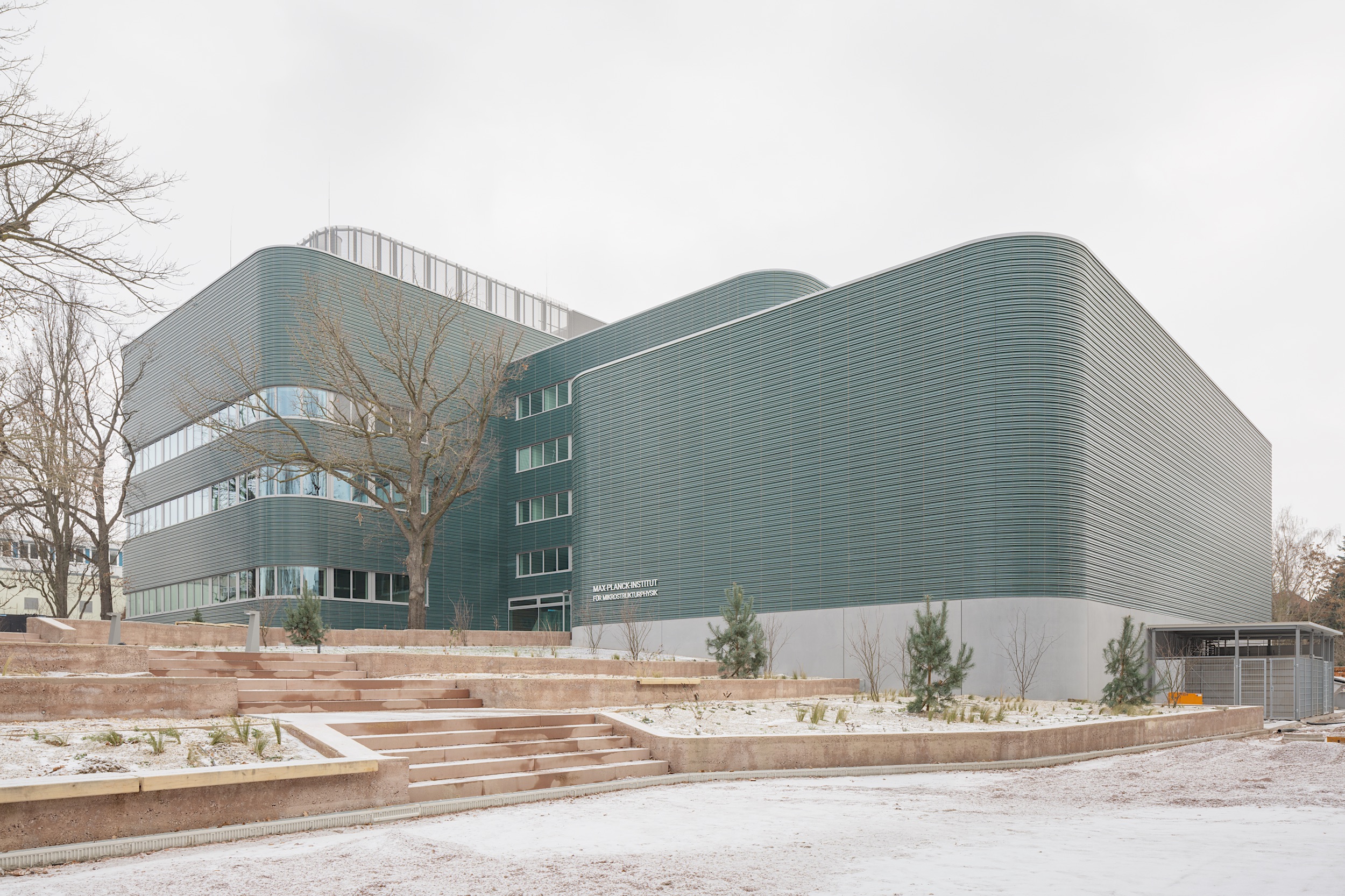
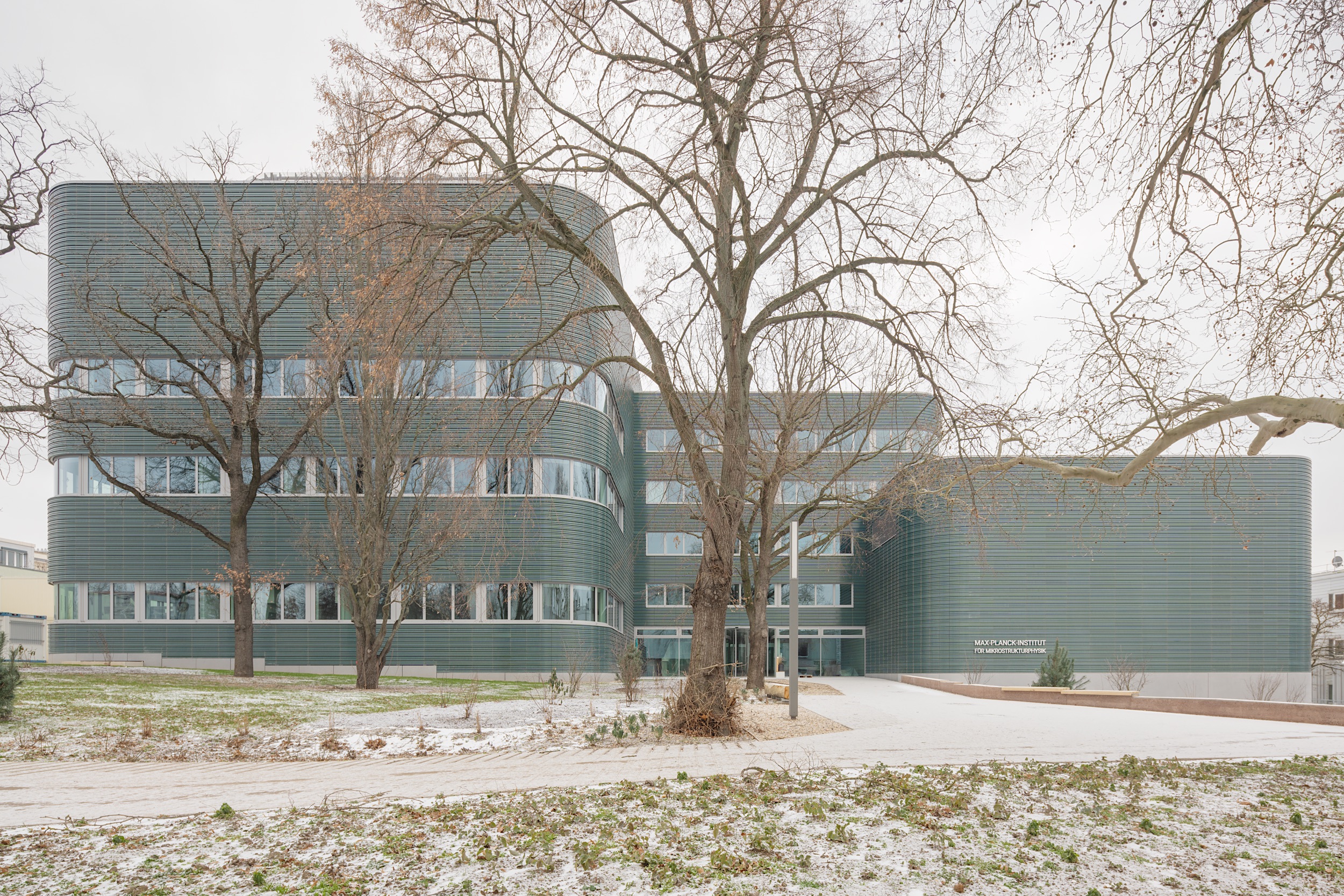
The new building is composed of three volumes, each fulfilling a distinct function and clearly expressed in the urban setting. With its articulation and staggered heights, the building responds both to the heterogeneous, partly small‑scale structure of the surroundings and to the topography of the historic ”Weinberg”.
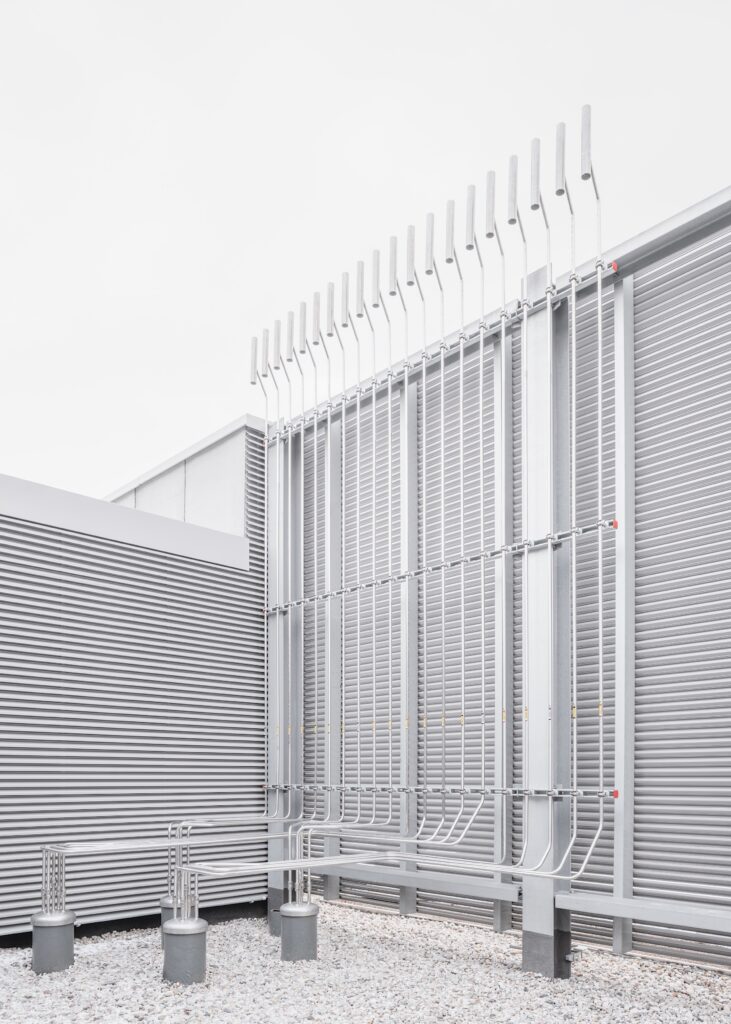
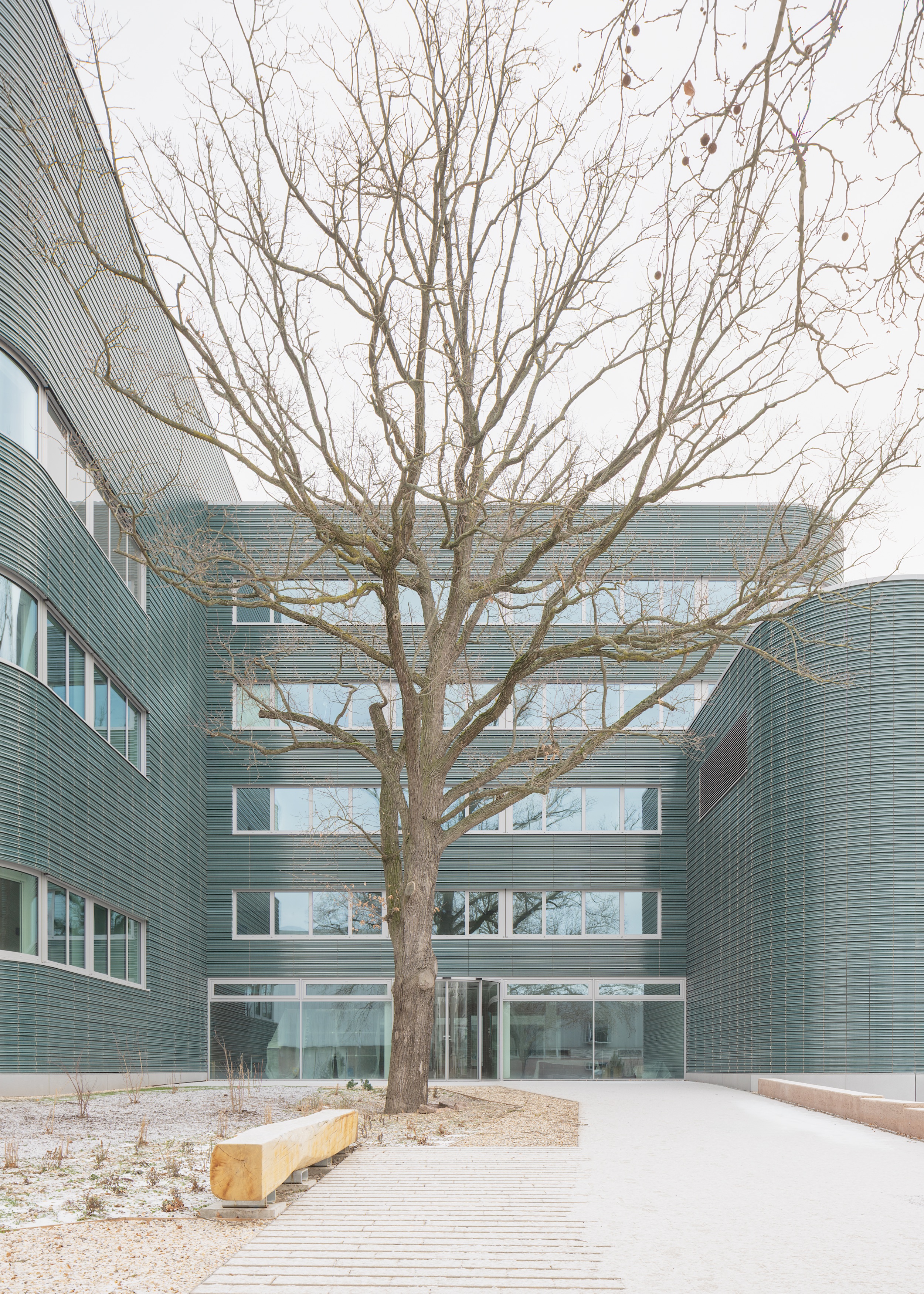
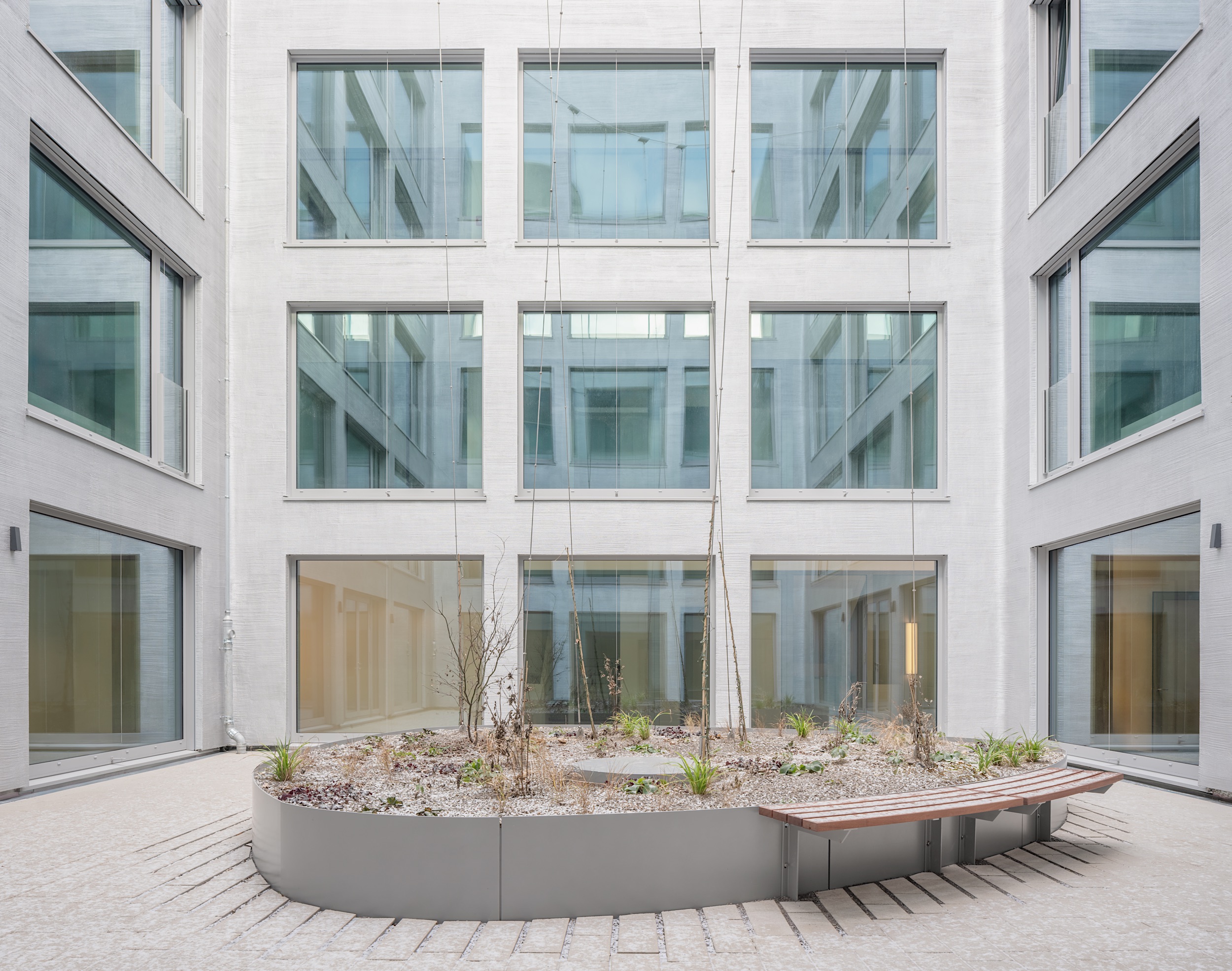
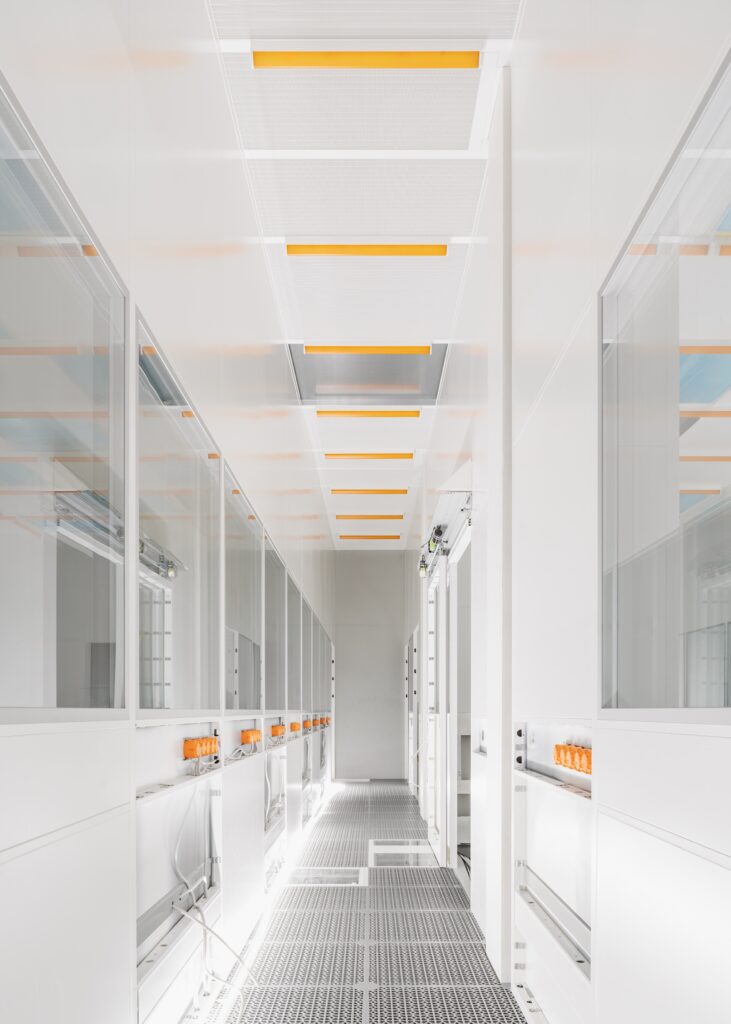
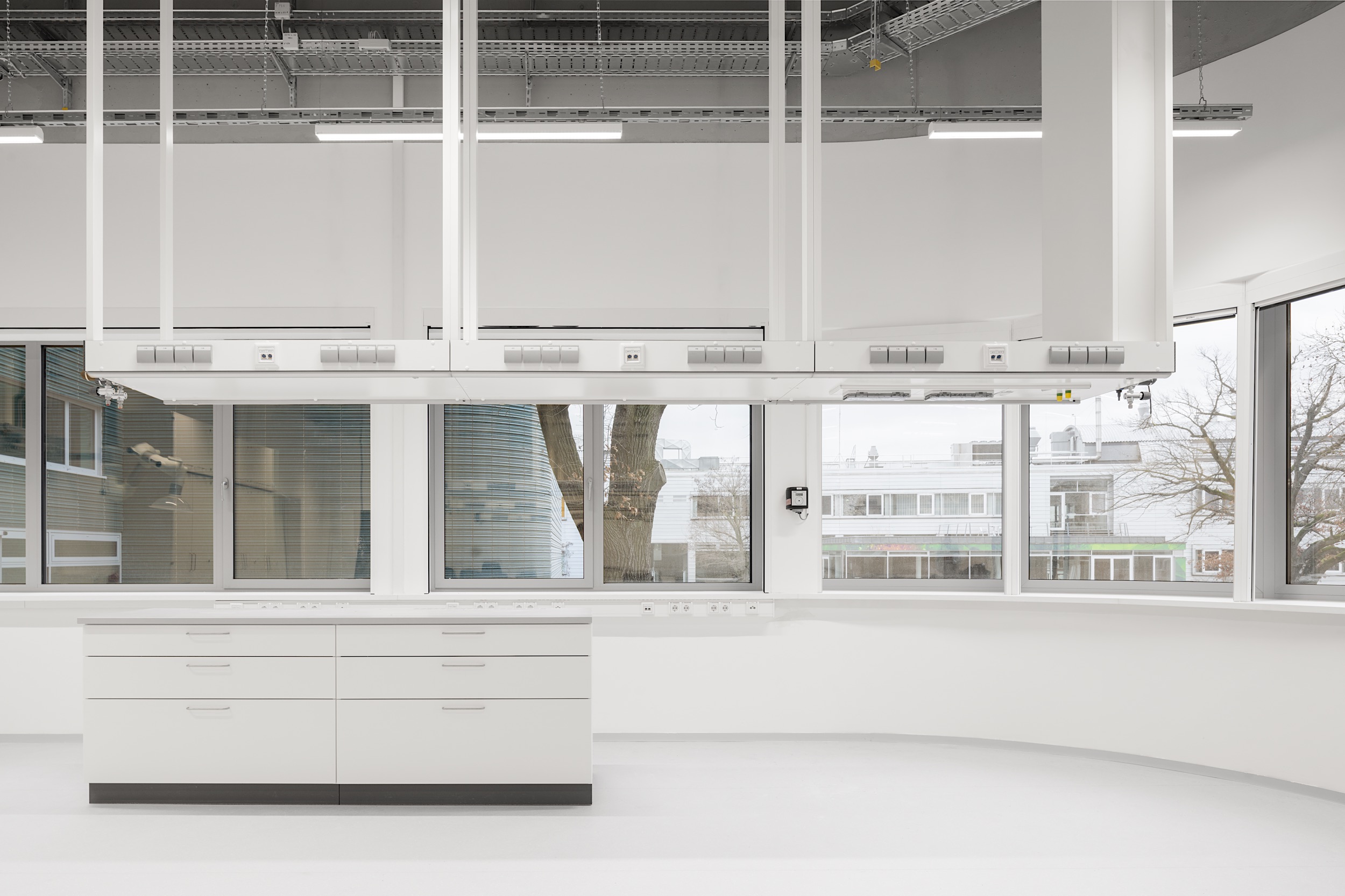
Centrally positioned and set back from the other two volumes lies the office wing, creating a central forecourt. To the north are the laboratories; to the south, the cleanroom with its airlock for experiments that must be conducted in an almost dust‑free and germ‑free environment.
Internal Organization
Employees and visitors enter the building via the newly defined forecourt. They are welcomed by a spacious foyer and the adjacent atrium, around which small niches are arranged. These spaces invite informal exchanges and spontaneous conversations – an aspect of scientific work that should not be underestimated.
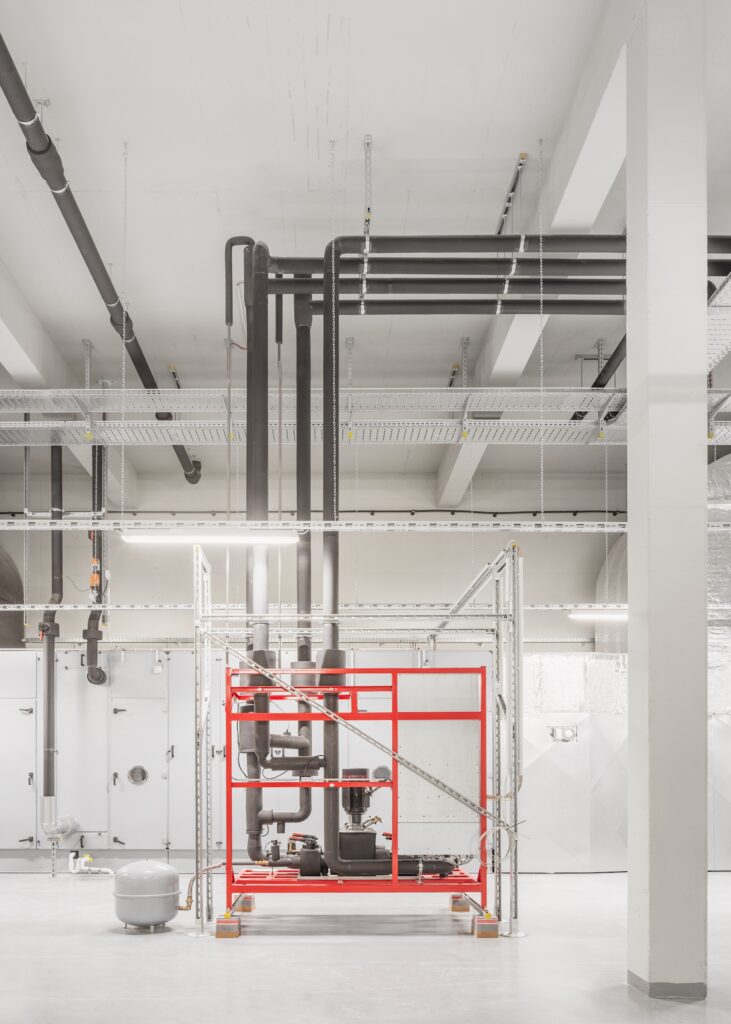
On the upper floors, office clusters surround the atrium. The laboratories are accessed via the central foyer, while the cleanroom – owing to its demanding technical and infrastructural requirements – is reached through the basement level.
A Blue‑Green Layer
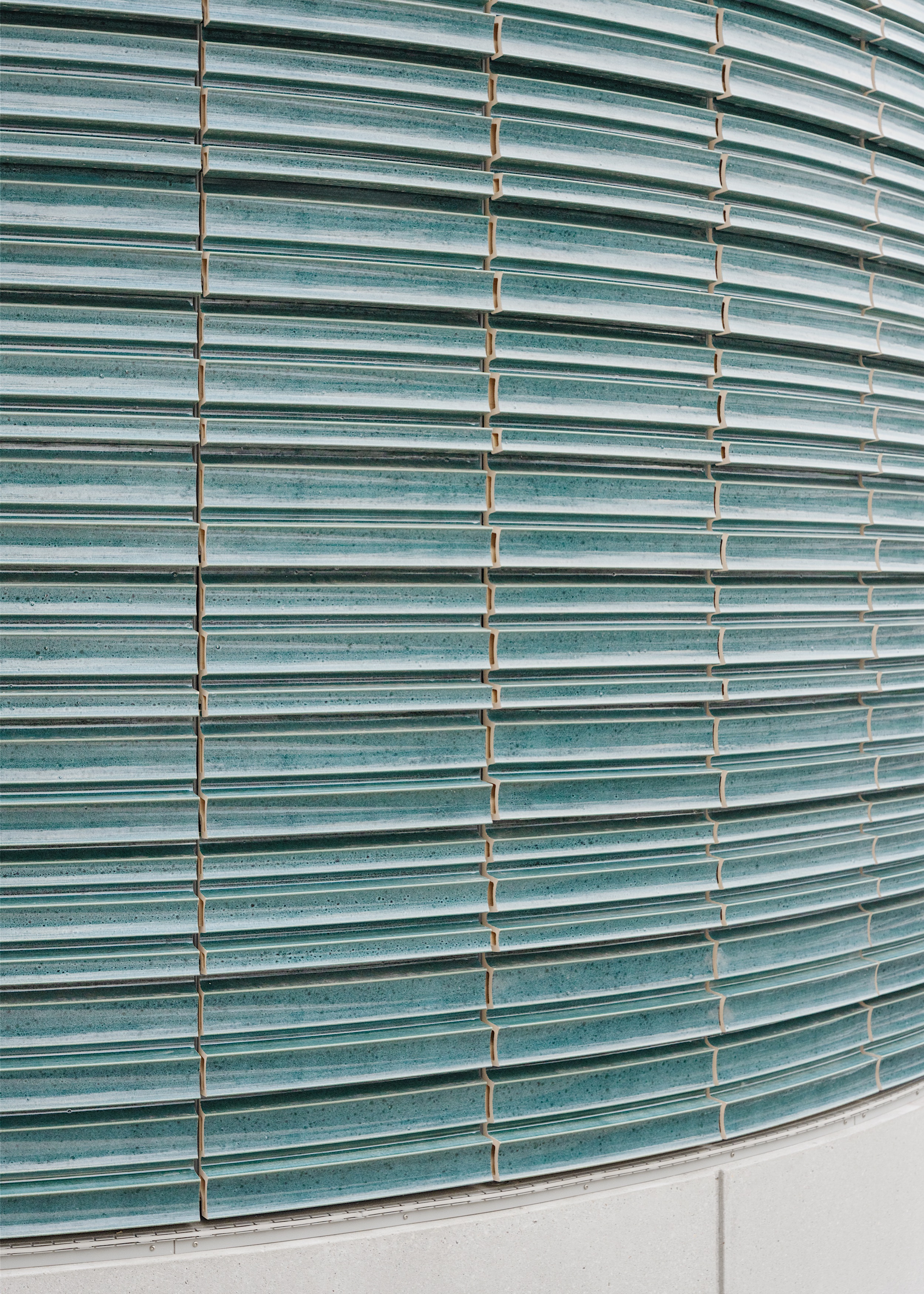
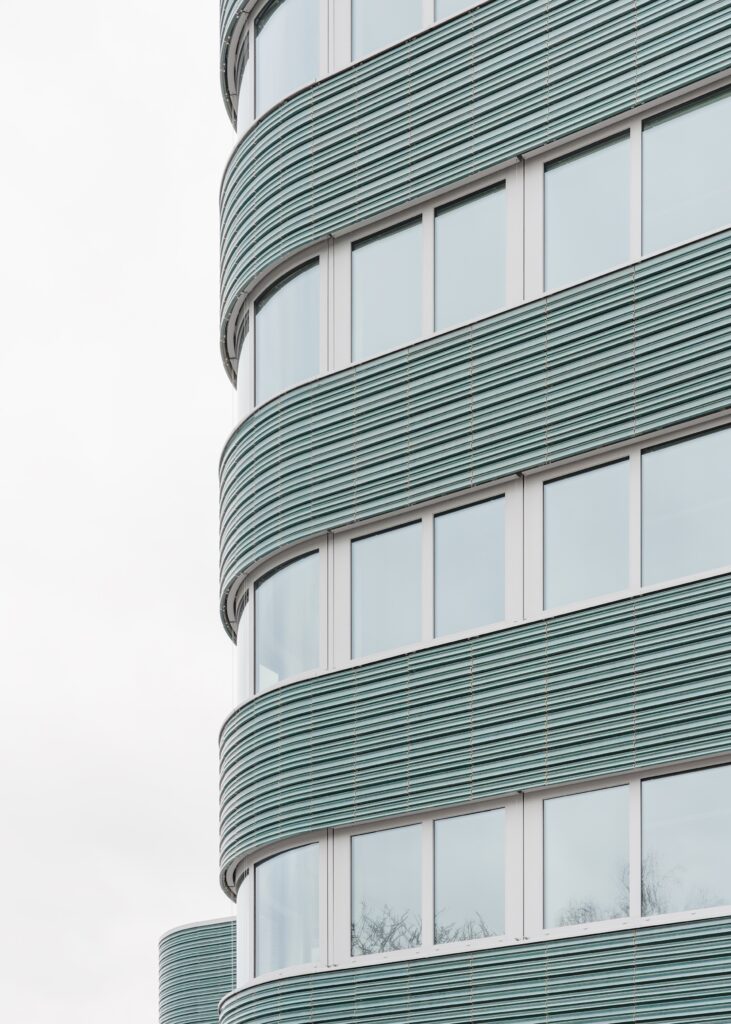
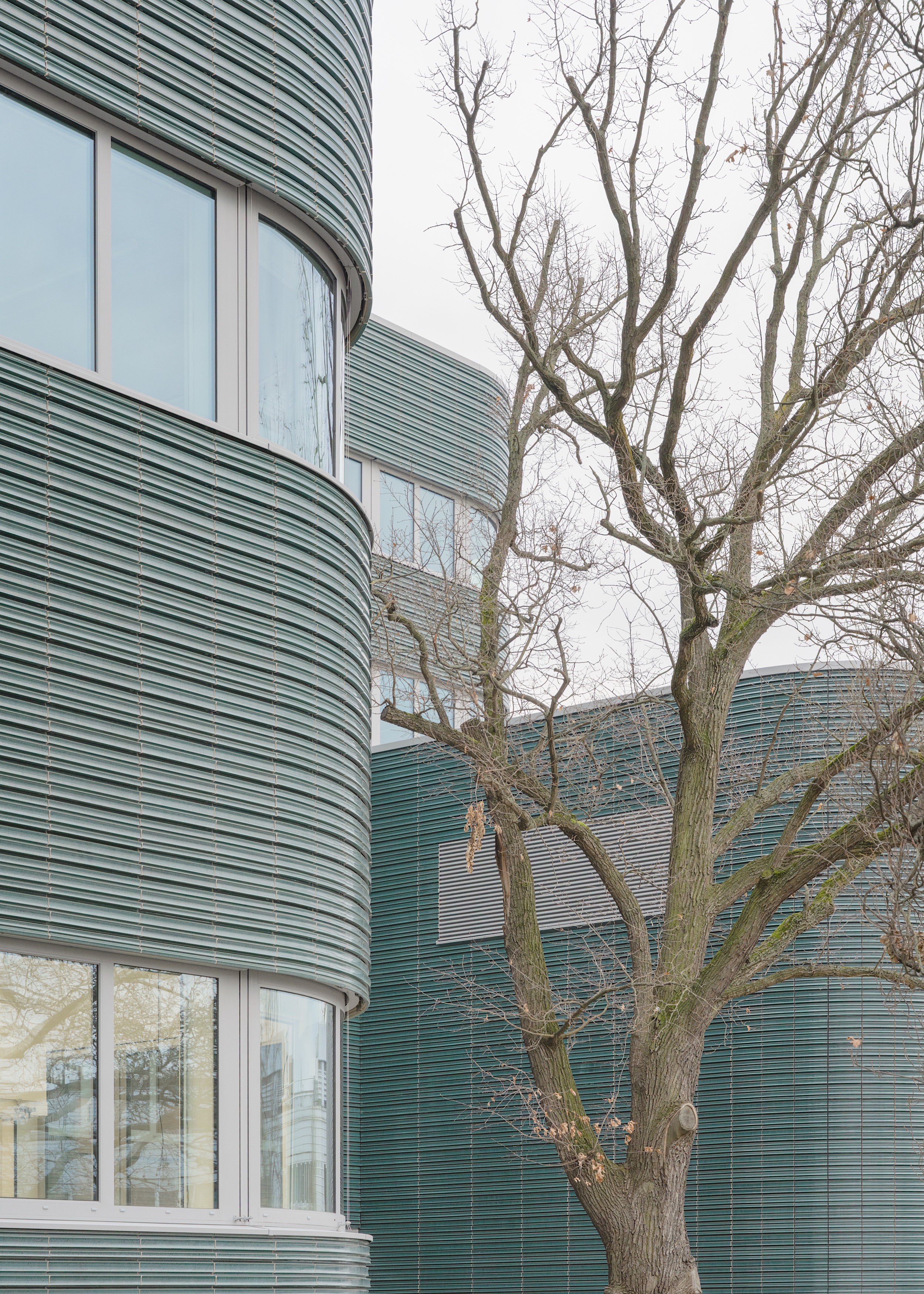
A layer of blue‑green glazed ceramic elements envelops all three building volumes, creating a play of color that shifts subtly with the time of day and the seasons. Together with the exposed‑concrete base which is more or less visible depending on the terrain and the rounded building corners, this results in a unified architectural expression and visual continuity.
Horizontal window bands underscore the facades’ layered structure and differentiate the various areas: the entrance façade of the office wing engages most openly with its surroundings; in the laboratory areas, technical zones dictate the rhythm of open and closed elements; while the cleanroom, with its complex climatic requirements, is almost entirely sealed off from the outside environment.