Library Learning Center, Kiel
With nearly 8,000 students, HAW Kiel is the largest university of applied sciences in Schleswig-Holstein. The campus is located directly on the Kiel Fjord—providing a fresh breeze from the sea. The site, a former industrial area, is accessible both via the Kiel Fjord/Schwentine waterway and from north via land. Setting an urban planning benchmark, the open architecture of the building acts as a “third place”, forming an important building block for an effective educational landscape that focuses on its users.
State of Schleswig-Holstein
2017–2025
Architecture, LPH 1-9
Schnepp Renou
Research & Education
Berlin, Deutschland
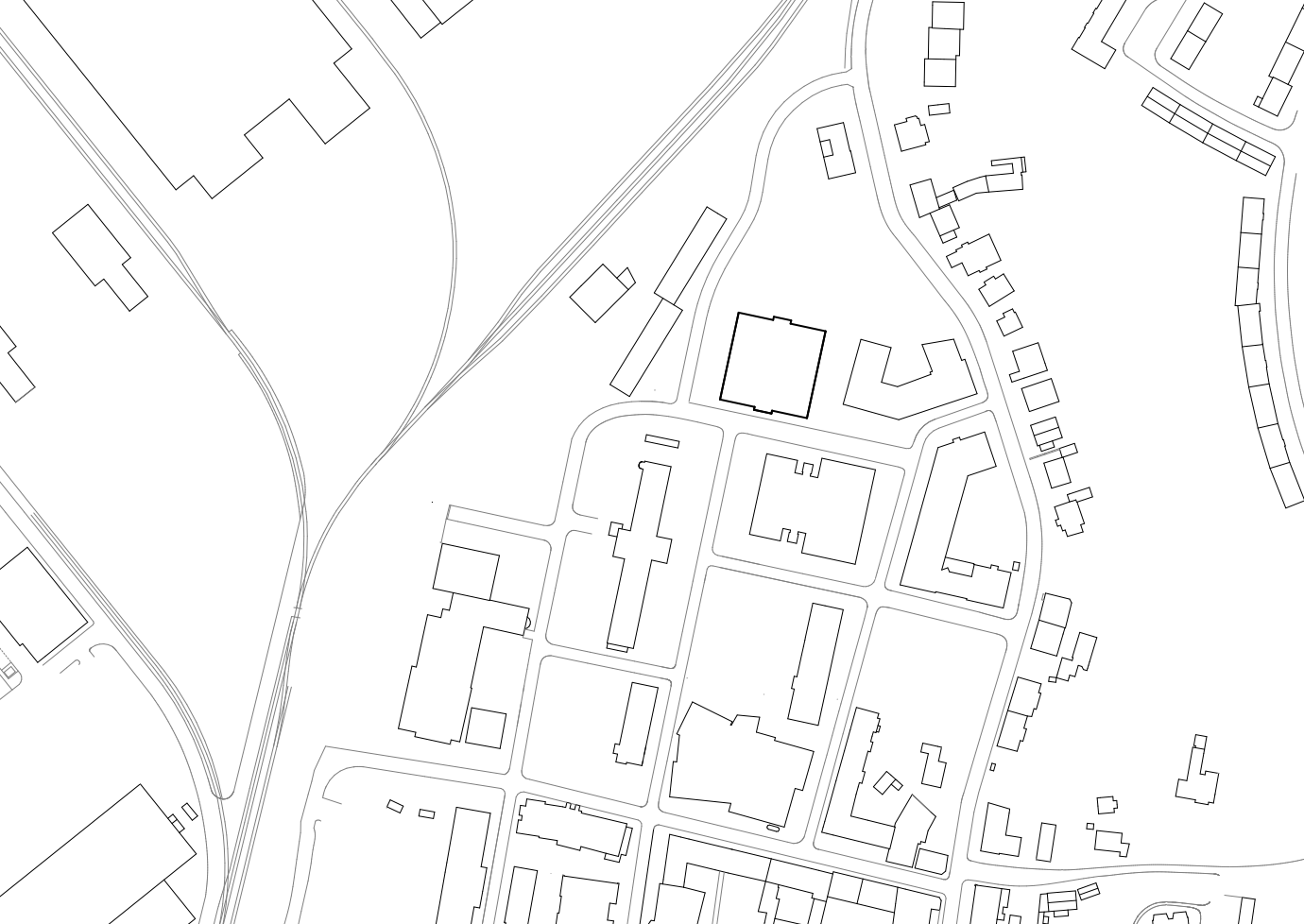
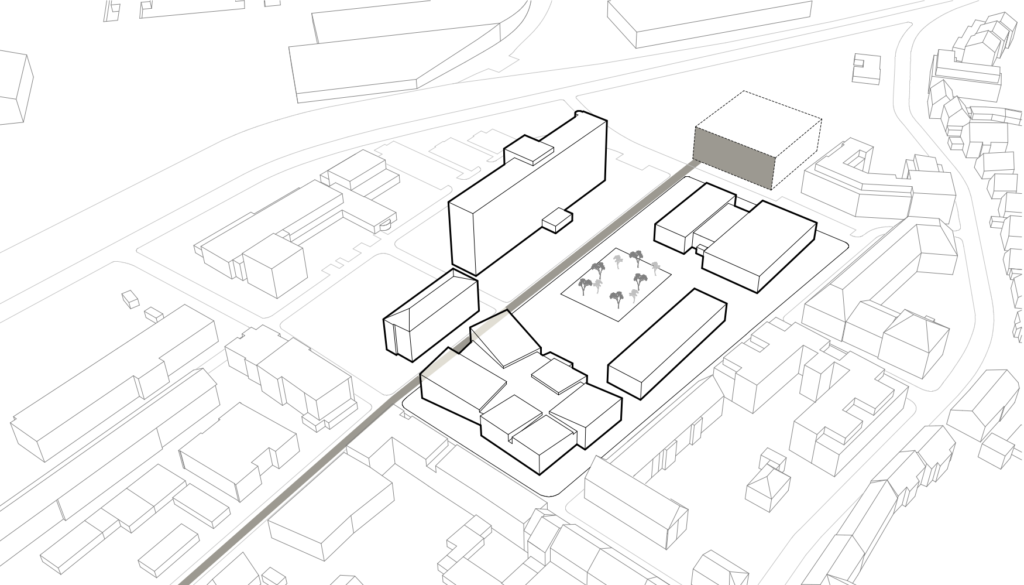
Urban completion of the campus
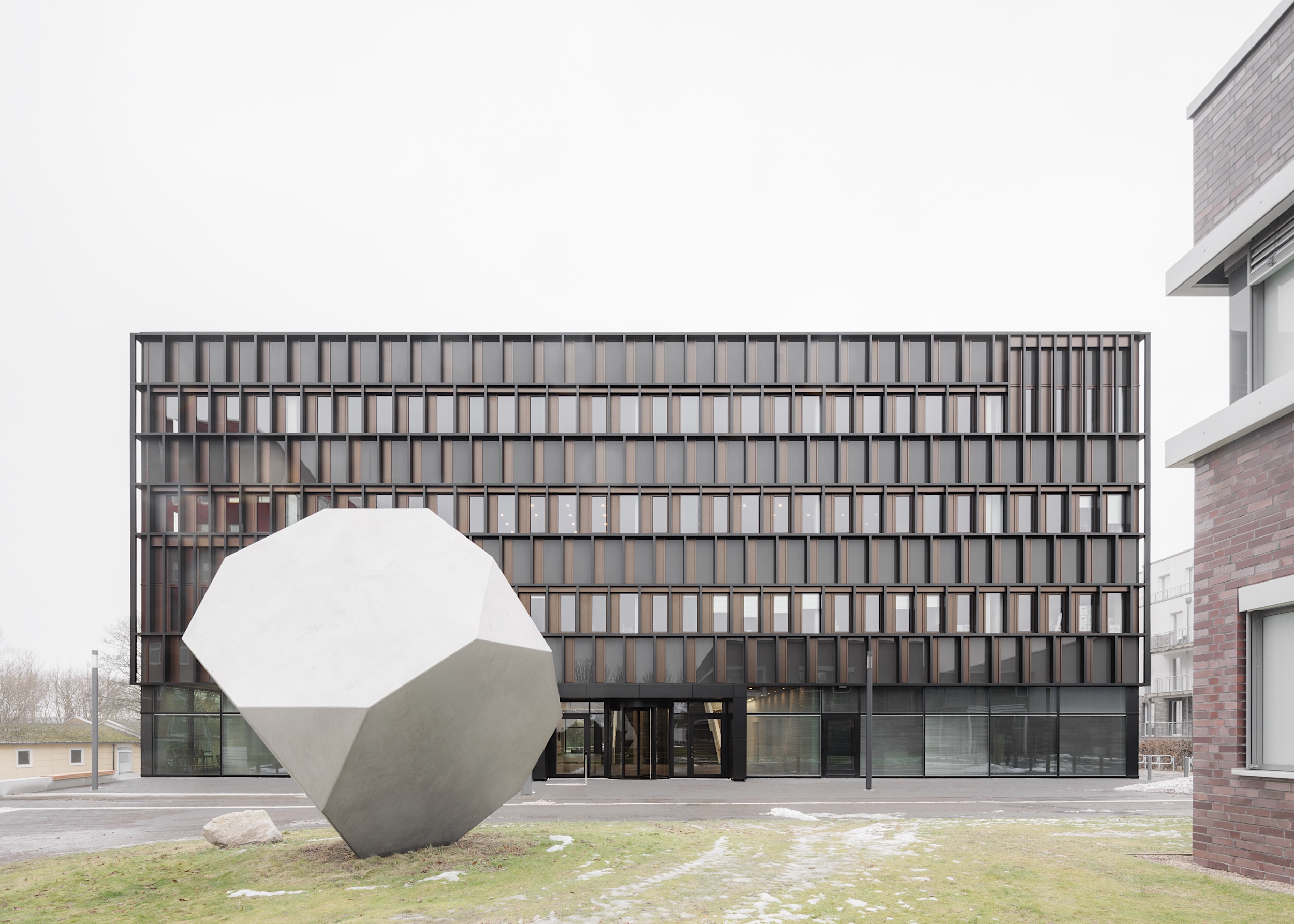
The urban master plan for the campus is based on a main axis stretching from a jetty to the new learning center. Halfway along this axis, surrounded by a variety of freestanding buildings, is Socrates Square. The four-story new building of the Lerndock marks the end point of the campus development in the north. With its square floor plan and transparent ground floor, the newly placed volume becomes a meeting place and mediator between the different areas of the university.
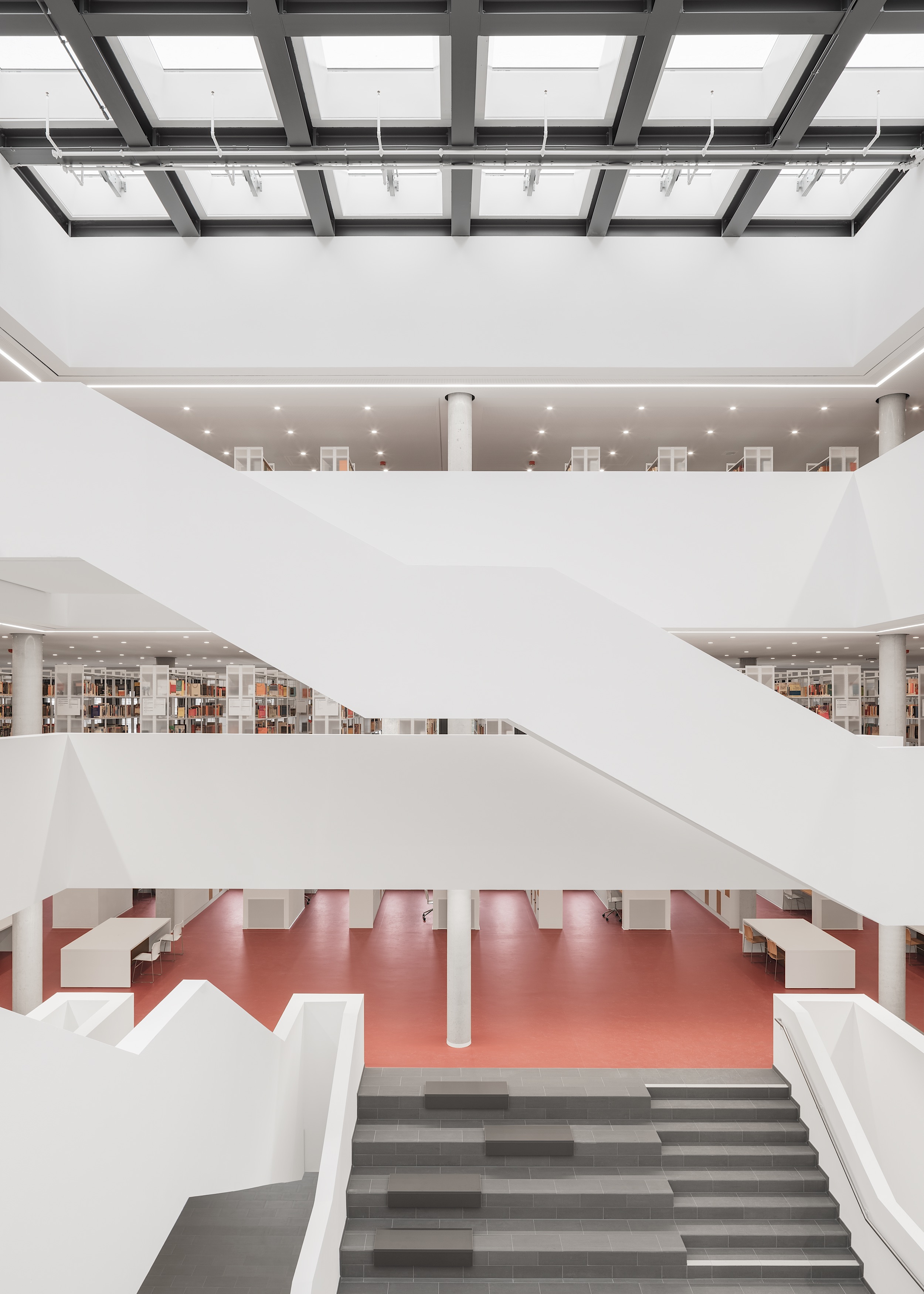
The atrium as a graphic symbol
The building addresses all students across disciplines, and its usage concept turns it into the lively center of the university. An open foyer welcomes users and visitors alike and beacons them to the heart of the building: the light-flooded atrium. From here, the sculpturally designed main staircase leads upwards to connect all levels. With its wide seating steps, it is not only a circulation space but also a place to linger. Thanks to numerous visual references, it provides orientation in the compact structure, while 36 skylights ensure a pleasant lighting atmosphere.
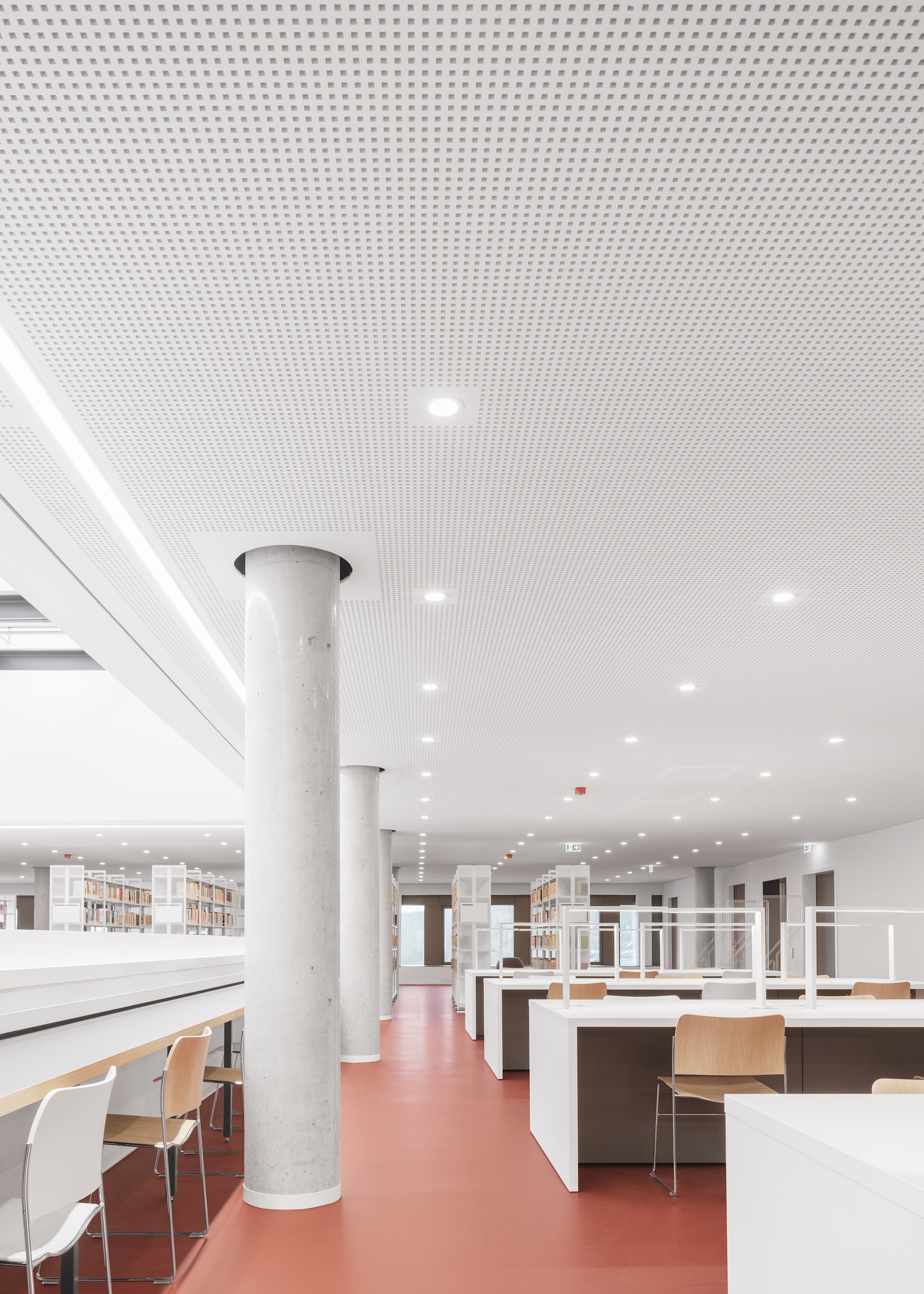
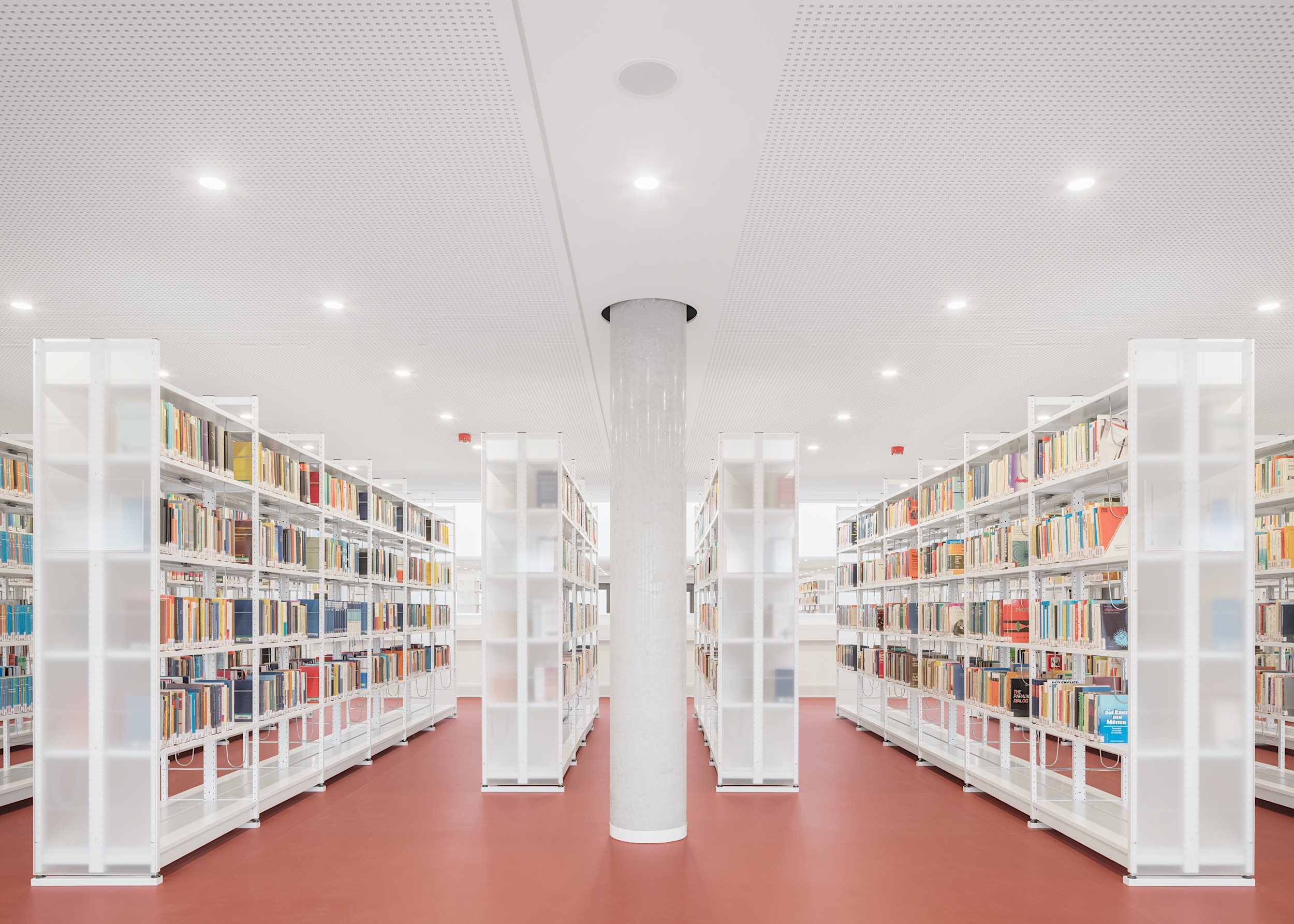
Open learning environments
The learning landscape arranged around the atrium is organized as an open floor plan. Its various spaces are laid out in such a way that they repeatedly open up areas, offering different views of the outside surroundings.
Inside the building, the uses are arranged vertically with decreasing public access: the ground floor with the entrance, foyer, senate halls, and cafeteria are designed to be as transparent as possible for everyone. The “Center for Learning and Teaching Development” is located on the first floor, while the library extends over two floors. All levels feature quiet areas for undisturbed reading and learning, places for collaborative work and informal encounters. The roof terrace, with its sweeping views of the city and the fjord, completes the building. On special occasions such as readings, the terrace is opened to the public. The building can accommodate a total of approximately 700 people.
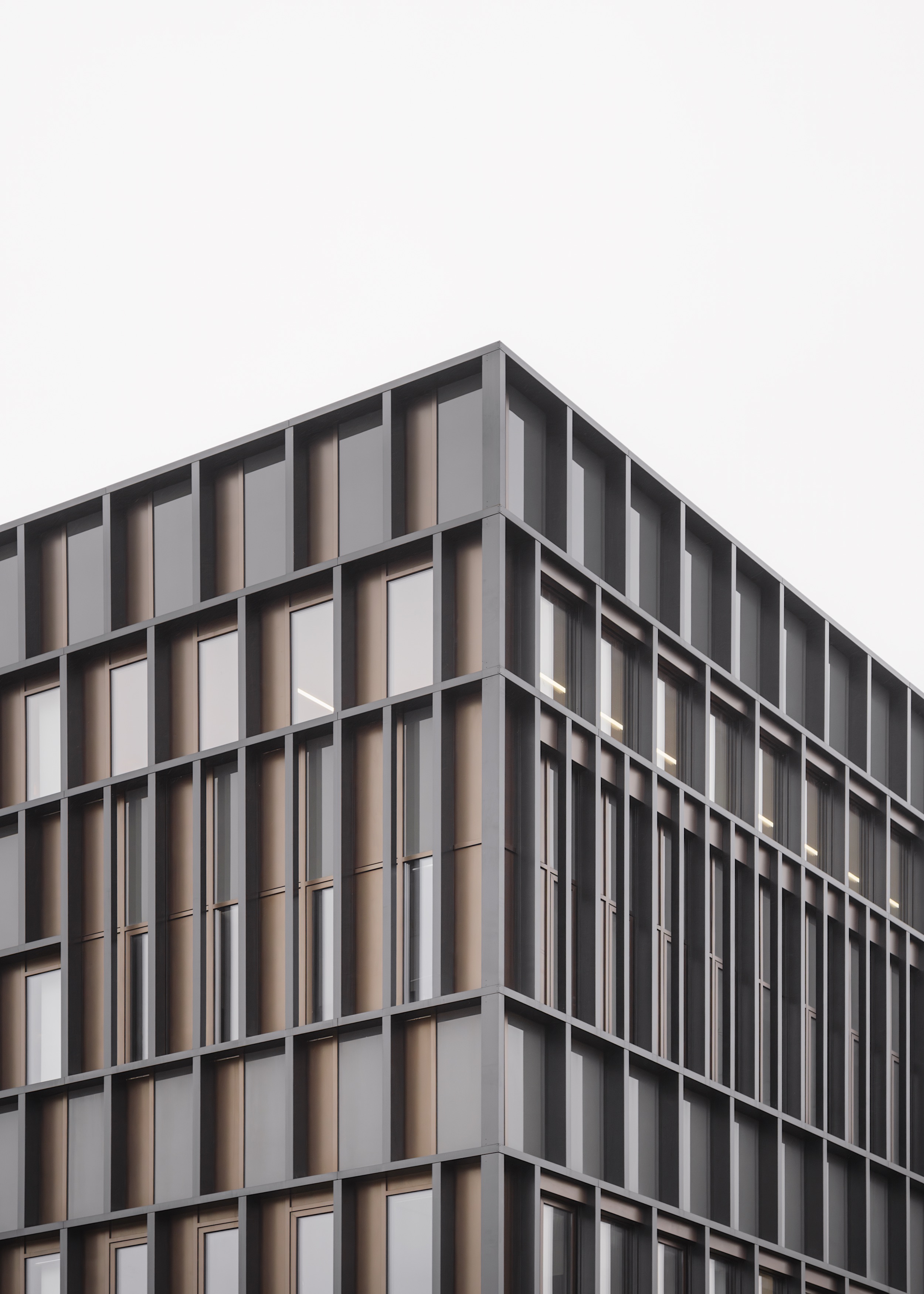
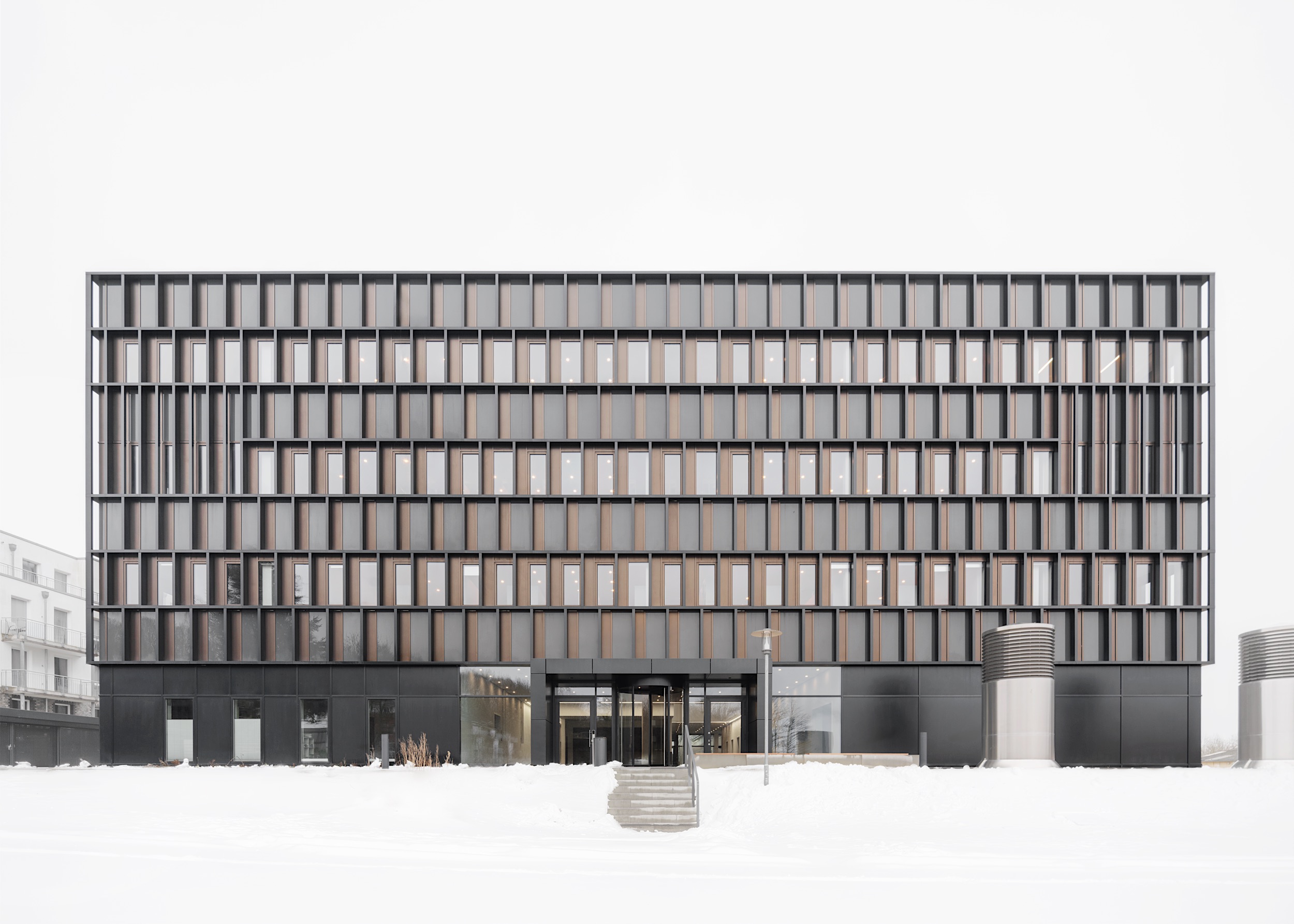
A dress made of metal and glass
Above the glazed base, the building is clad in a net-like metal façade. To reflect the various uses inside, the façade splits between more open and more closed areas. Not only does the post-and-beam construction fitted with narrow pilaster strips and made of powder-coated aluminum give a sculptural depth to the façade. The alternation of matte black and warm golden shimmering surfaces also adds a rhythmic quality. Plus, in keeping with the industrial port environment, the materiality and profiling are reminiscent of overseas containers.