Hohlstrasse, Zurich
Day after day, an avalanche of metal rolls through Hohlstrasse in Zurich's Hardquartier district. There, on the important connecting axis between Zurich-Altstetten and Zurich-Center, noise measurements have shown that road noise reaches up to 99 decibels – comparable to a jackhammer. However, the character of the noisy Hohlstrasse is set to change fundamentally over the next few years. This study commission can be seen as part of this transformation. Its aim is to transform the previously commercially used plot in an inhospitable location into a lively, redensified urban block in a central location with diversified forms of housing.
Steiner AG
2024
Study commission
Competition, Residential accommodation
Zurich, Schweiz
Architecture and liminal spaces
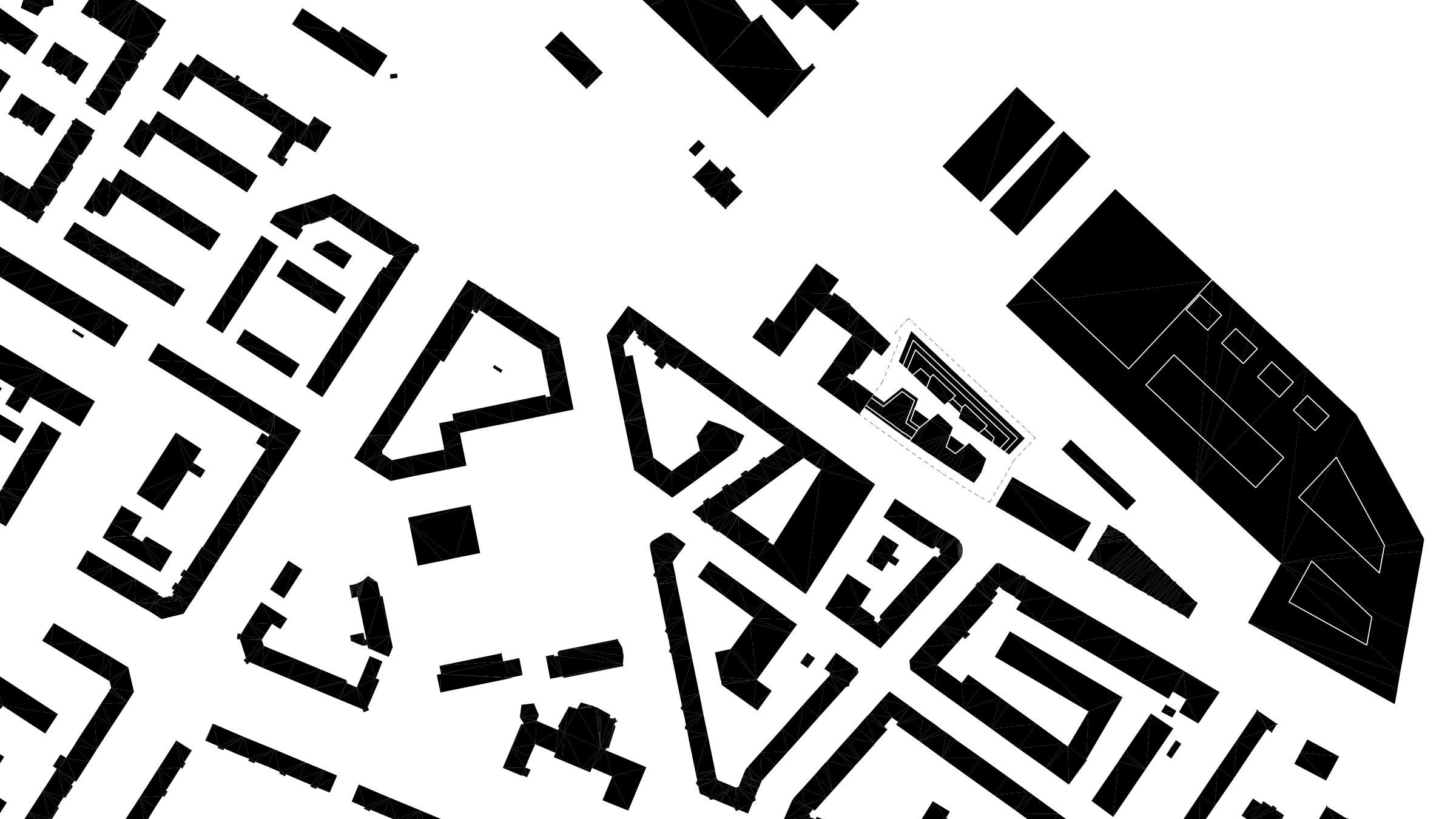
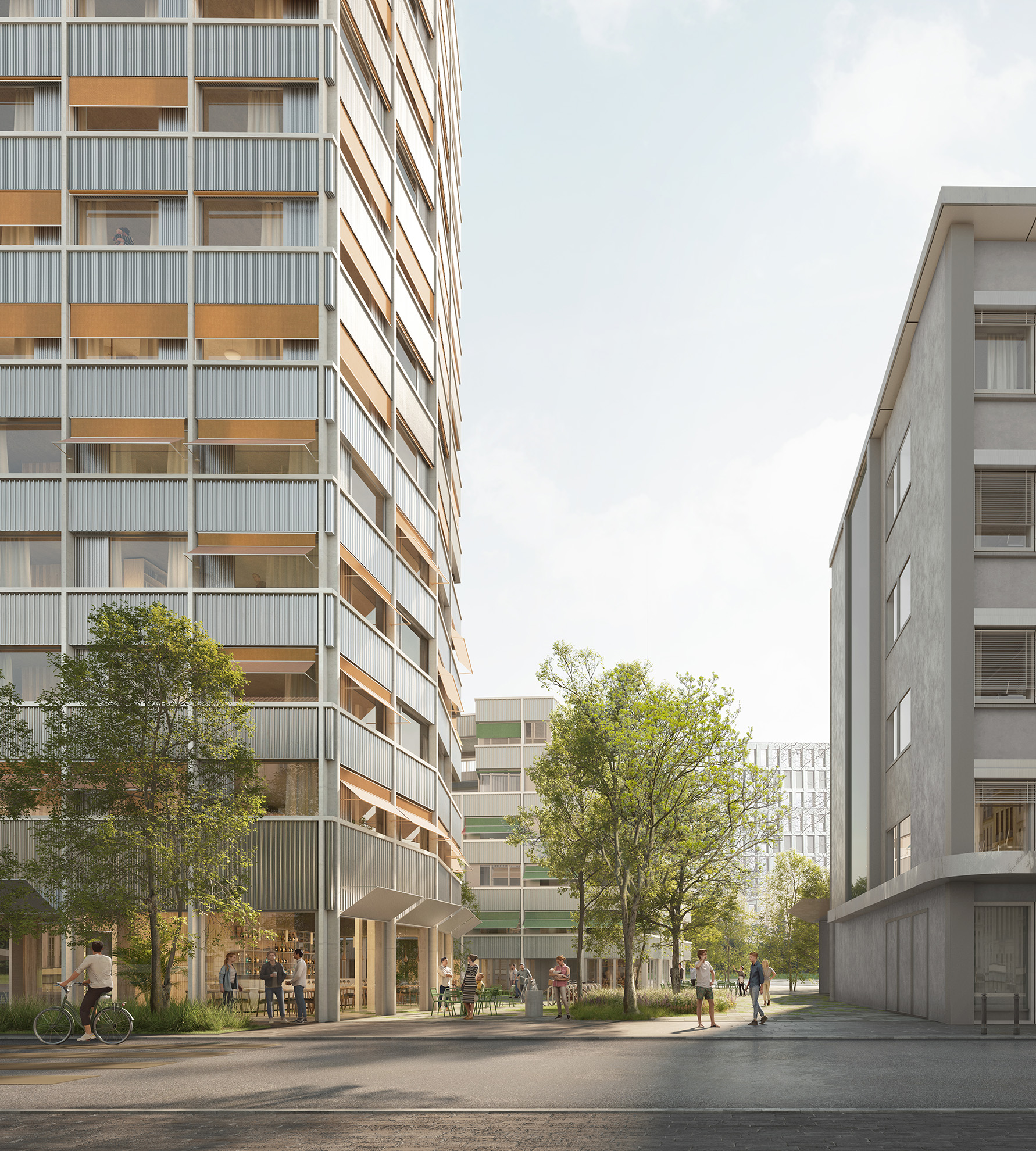
The ZickZack design mediates between the new Zurich Police and Justice Center property and the existing block development, introducing a new scale. The ensemble consists of a street-side edge building and a rear courtyard structure. Due to its height and the courtyard-side facade connection, the street-side block relates to the volumes to the west, while its east side is topped by a 40-meter-high tower. This high point serves as a prelude and at the same time forms a new arrival plaza.
Architecture
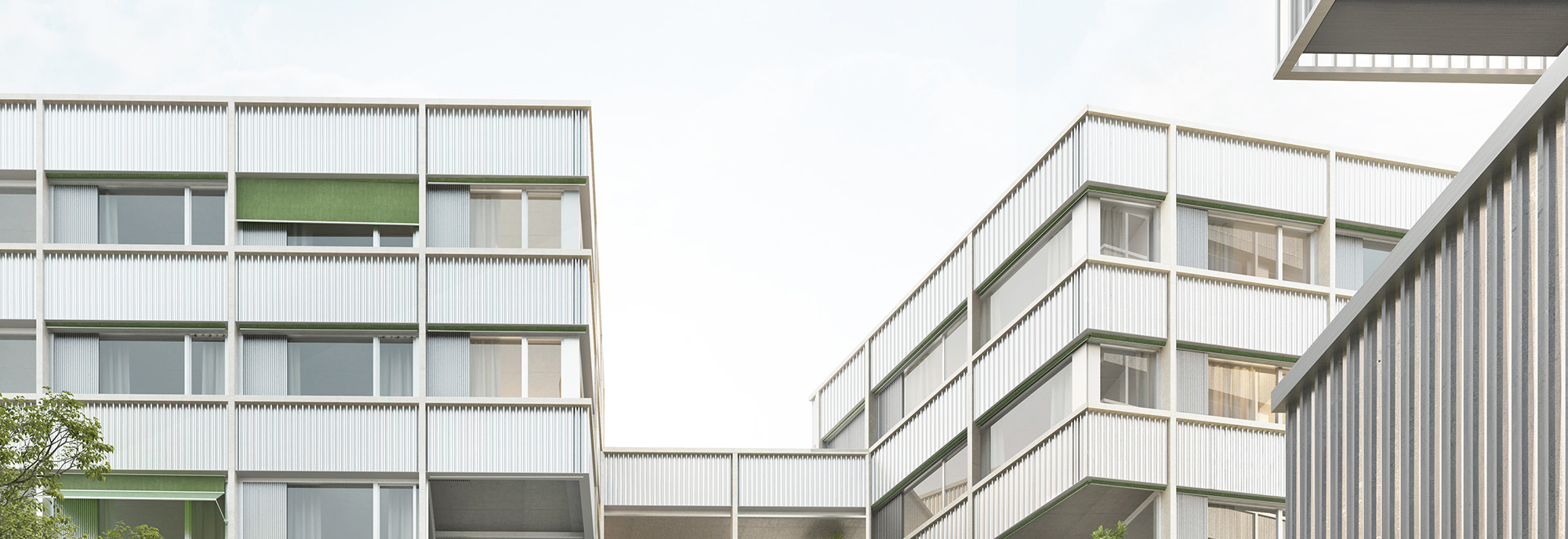
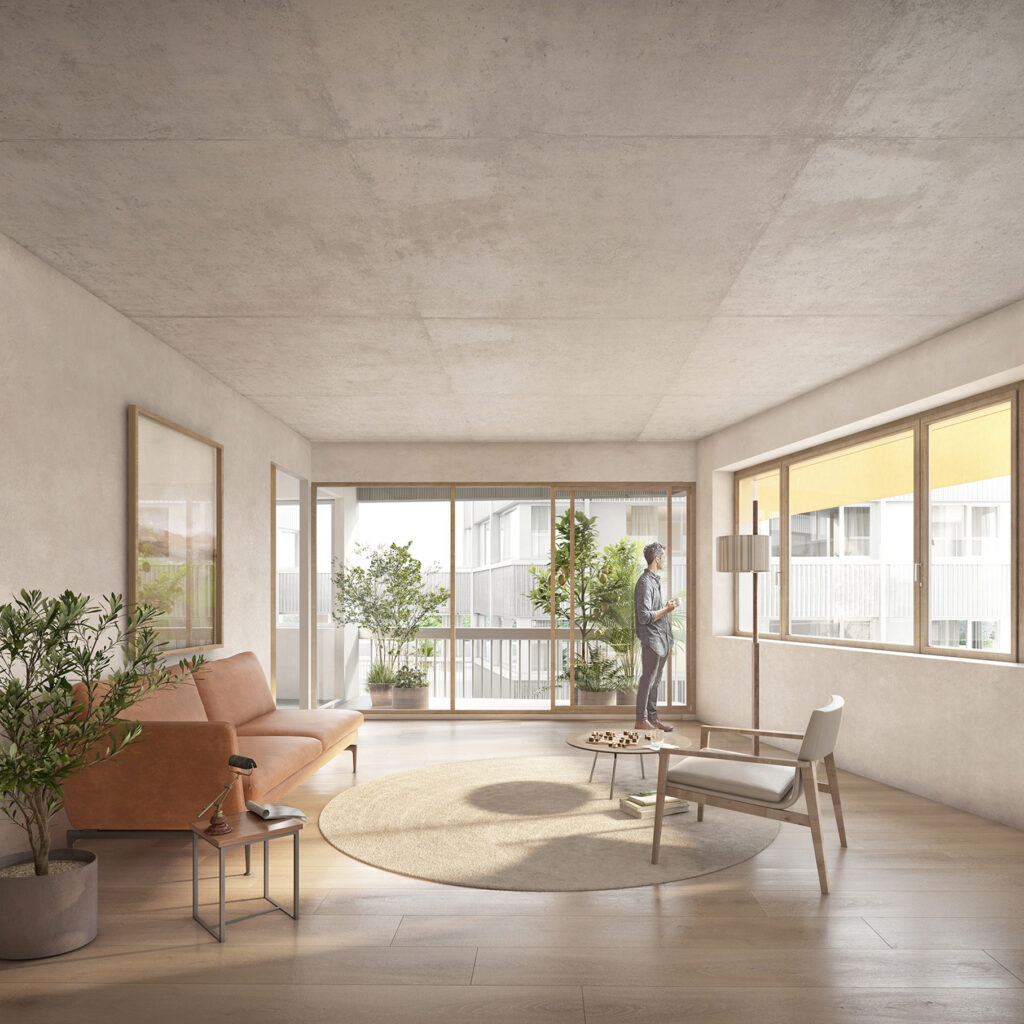
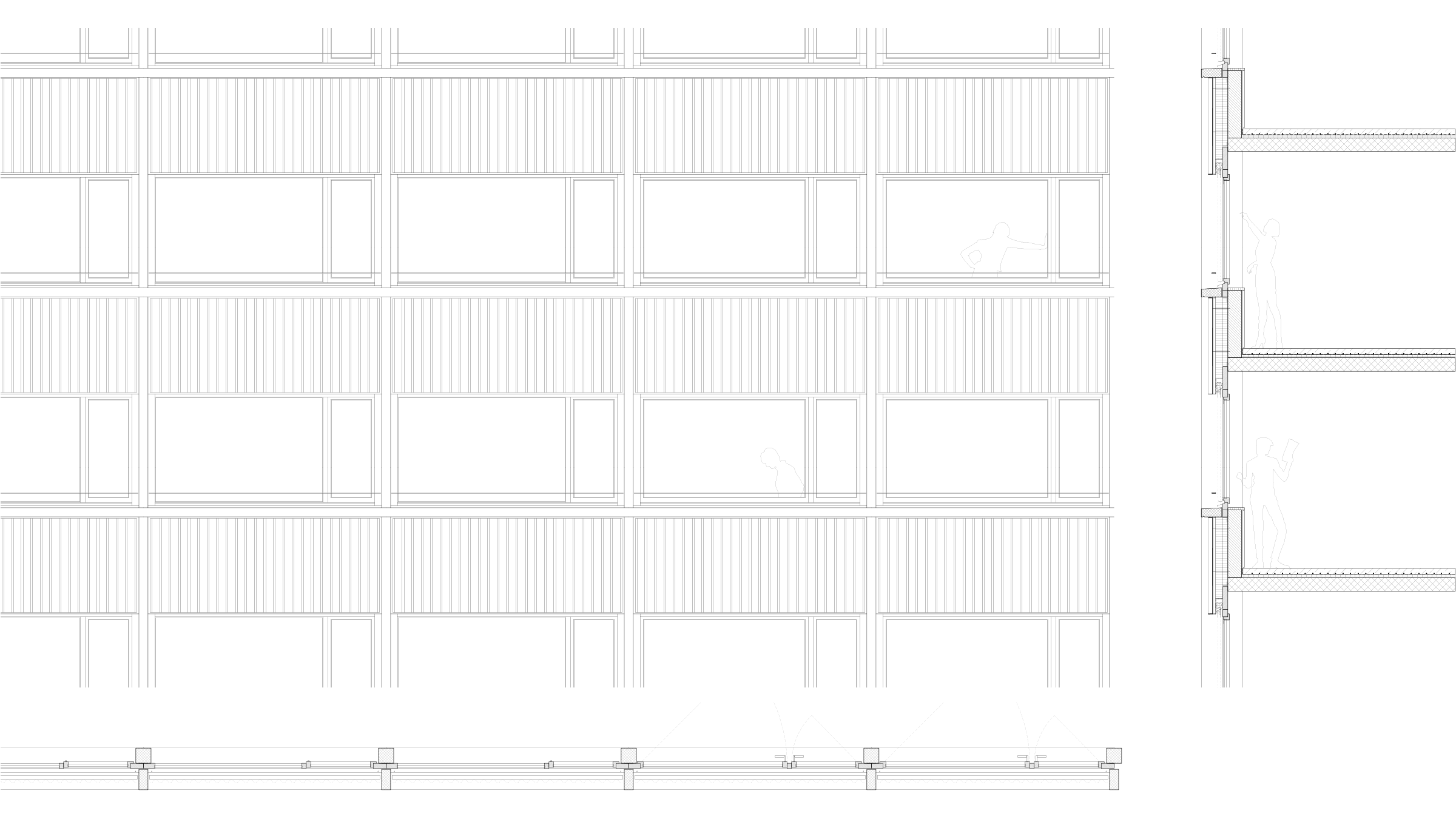
This also ensures that the plot to the east can be developed. The courtyard building extends across the entire plot towards Güterstrasse as a solid skeleton structure. Robust materials that reflect the industrial history of the neighbourhood characterise its appearance. Like the entire façade, they can be easily assembled and dismantled in line with the principles of ‘Design for Disassembly’.
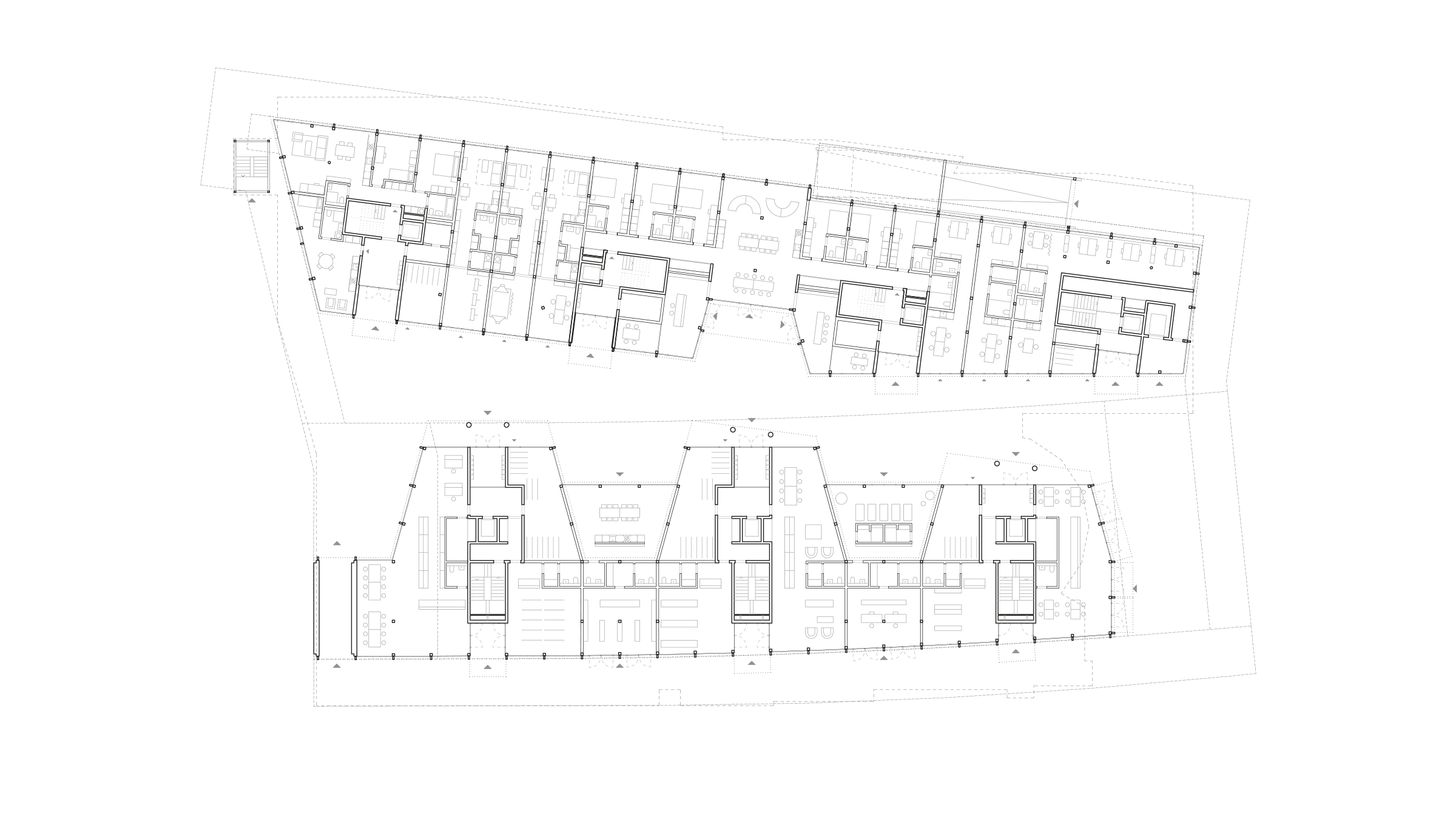
Zigzag floor plans for quality living
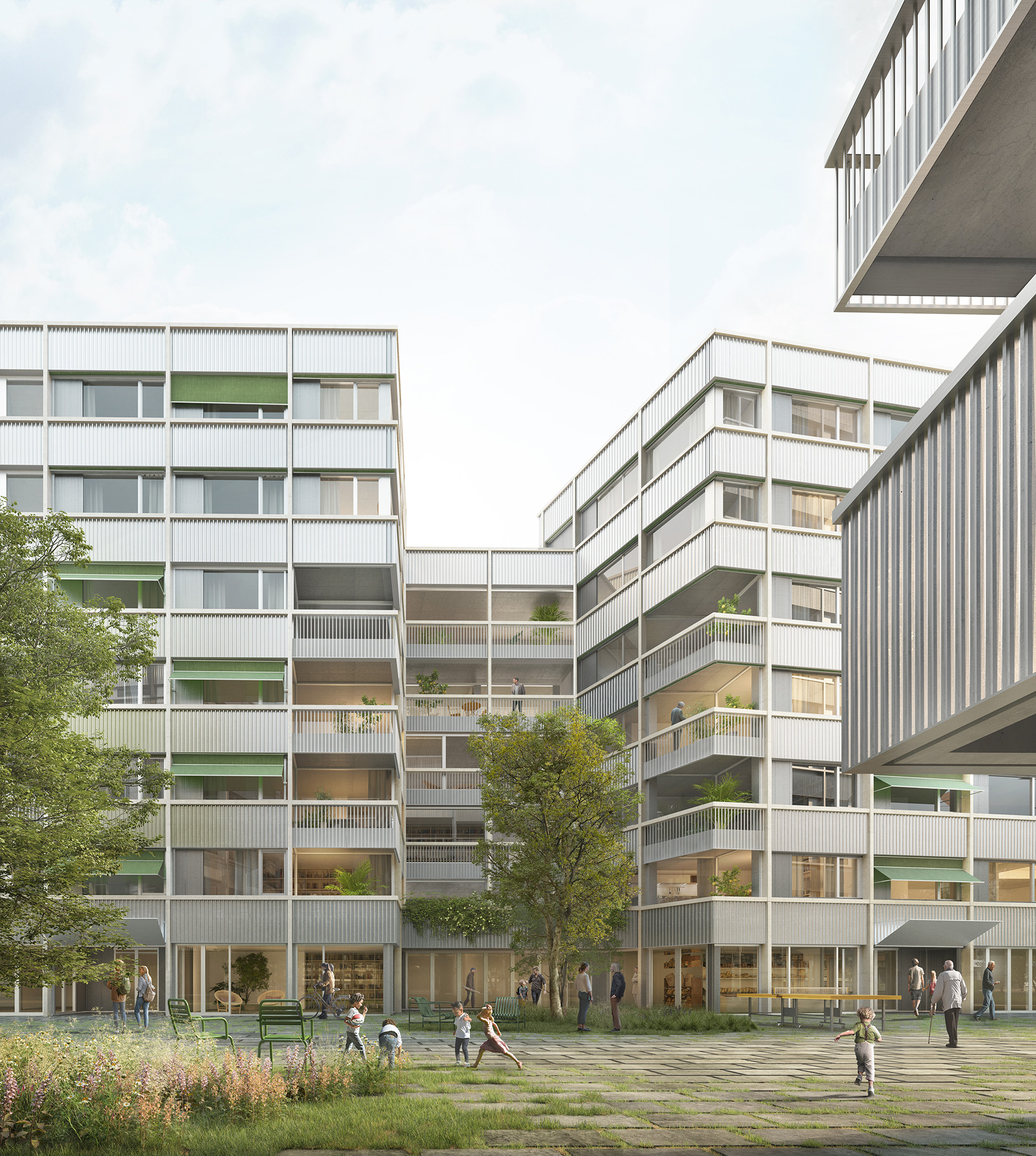
Both the street-side edge building and the rear courtyard edifice have a zigzag-like comb structure in their floor plans. On the one hand, this allows for the necessary natural ventilation from the courtyard side, which is away from noise and emissions, and on the other hand, it mitigates the spatial proximity between the two volumes. The interplay of projections and recesses in the building’s volumetry creates an exciting spatial interstice that not only appears broken in its length but also ensures sufficient distance between the respective flats. Despite the dense development, this means that residents do not experience any stress due to overcrowding.
Diverse mix of uses
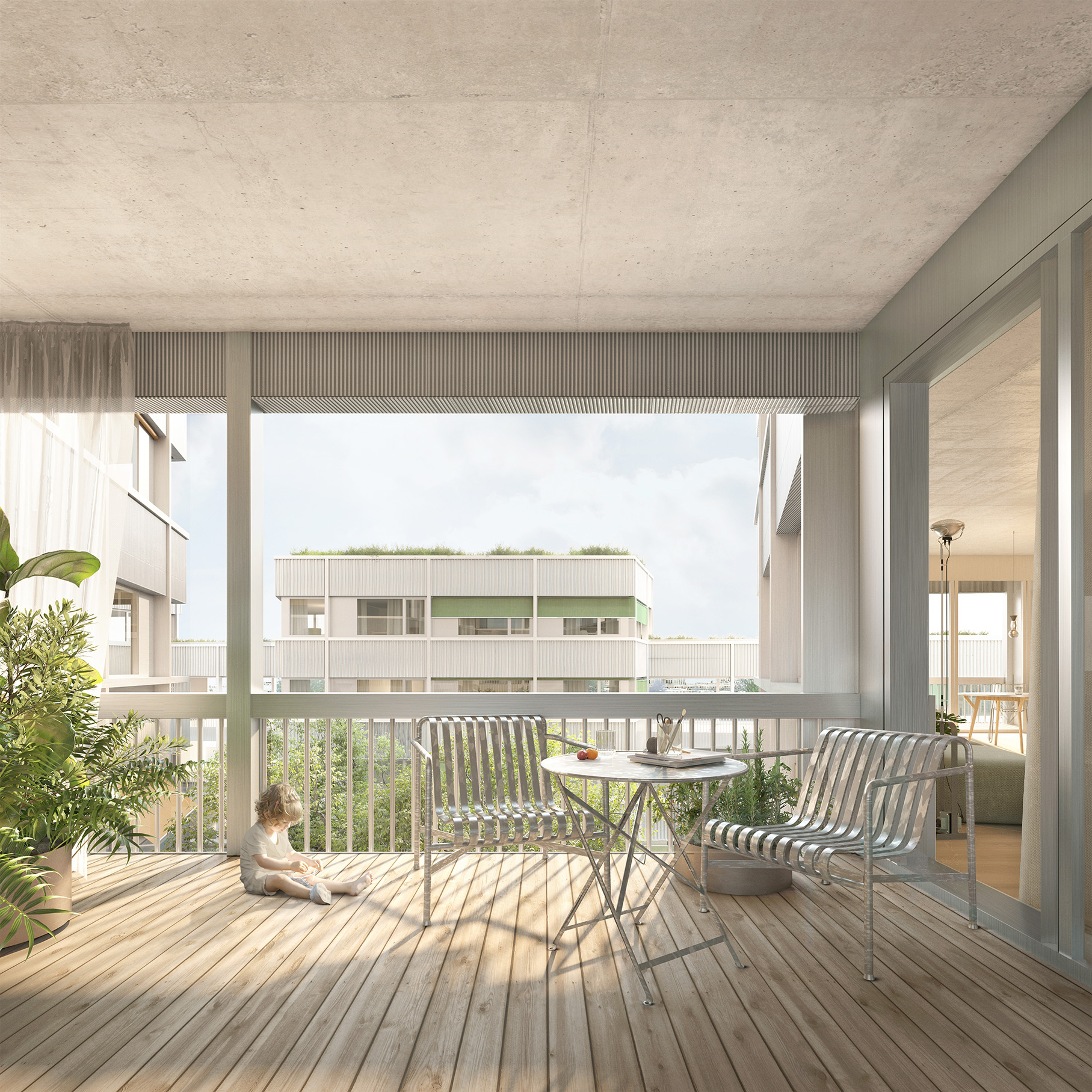
The mix of uses comprises residential, co-living, commercial and retail, with residential accounting for the largest share with a total of 126 flats. Only the ground floor features flexibly divisible commercial and service areas, as well as bicycle parking spaces and communal zones. The first to twelfth floors are residential. The open floor plans are compact and designed as multi-unit dwellings. The corner apartments are bright and offer panoramic views, while interconnected outdoor loggias provide private outdoor spaces. The five-storey courtyard building is home to the co-living concept, the heart of which is the common living, cooking and dining area. It can be opened to the courtyard via large sliding windows, while communal terraces – in addition to private ones – invite residents to linger on Güterstrasse.
Lively outdoor space
The design ensures high quality outdoor space. It is formed by three defining axes: because the open space along Hohlstrasse is characterised by city life and traffic, it is designed to be generous. A lively alleyway stretches between the two buildings: inviting courtyards meet green islands with trees and shrubs – a place for exchange and encounters.
The result is a high-density new development that transforms an urban wasteland into a showcase project for high-quality residential development.