Redesign of Zurich Airport access areas, Zurich
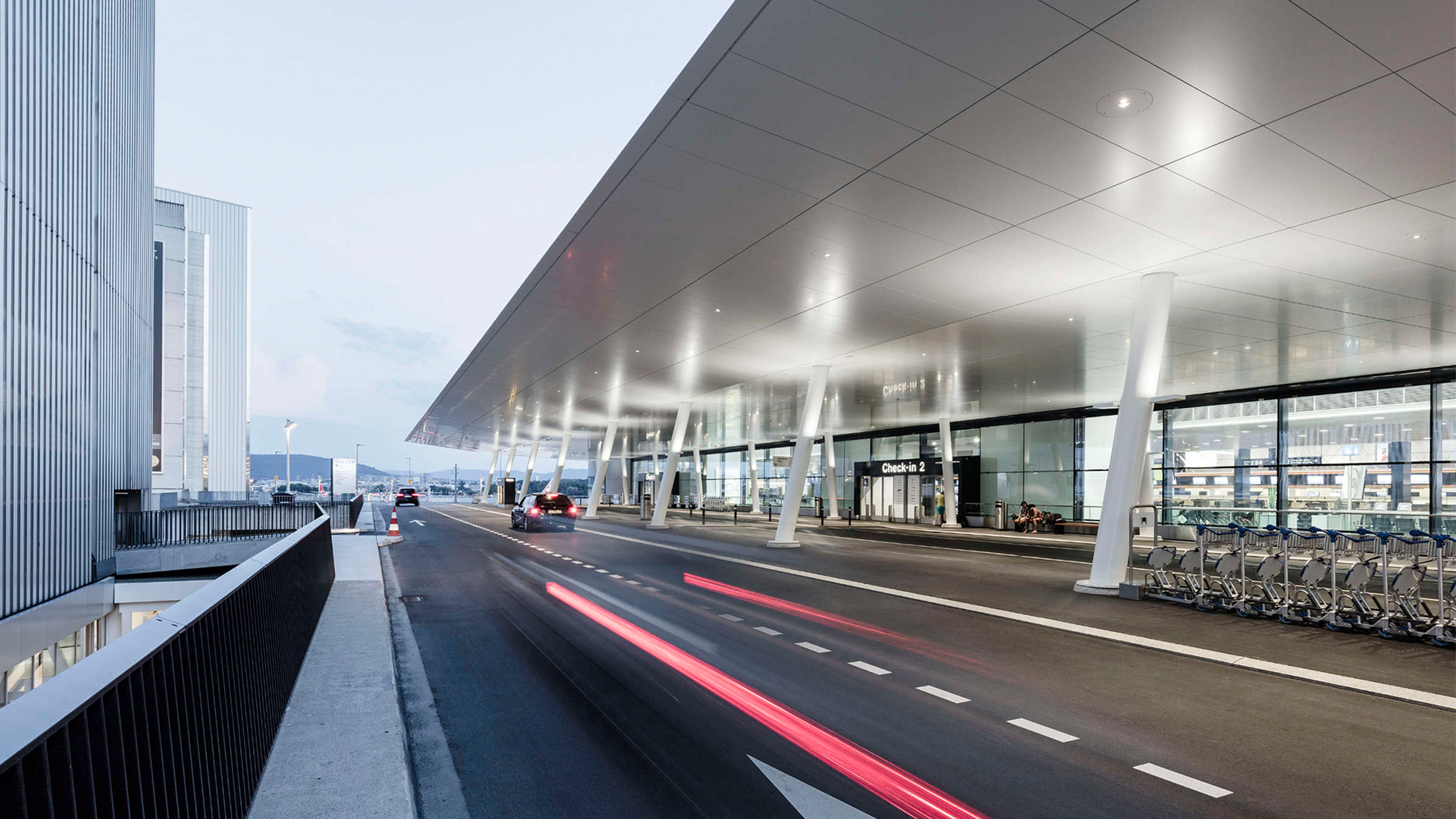
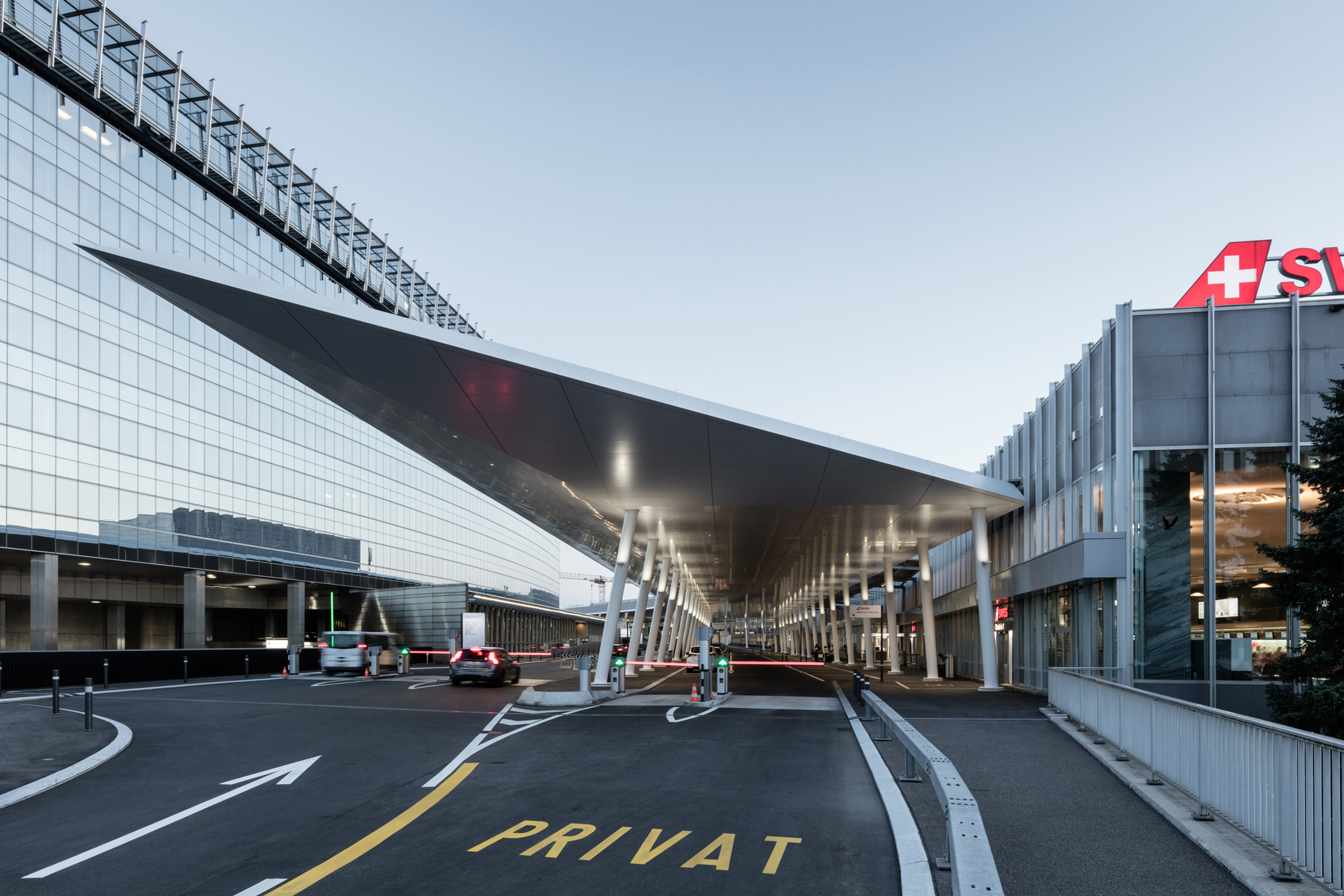
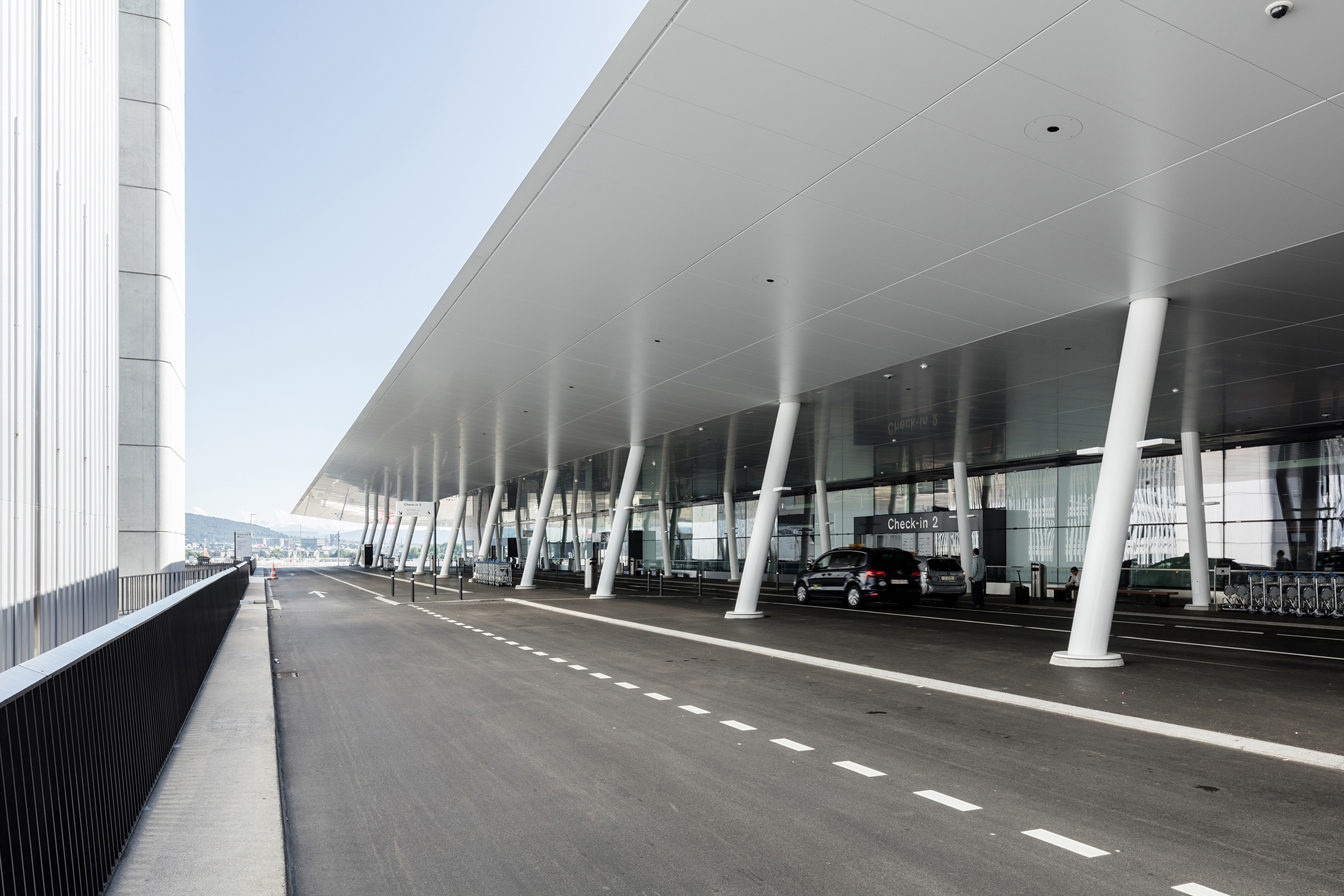
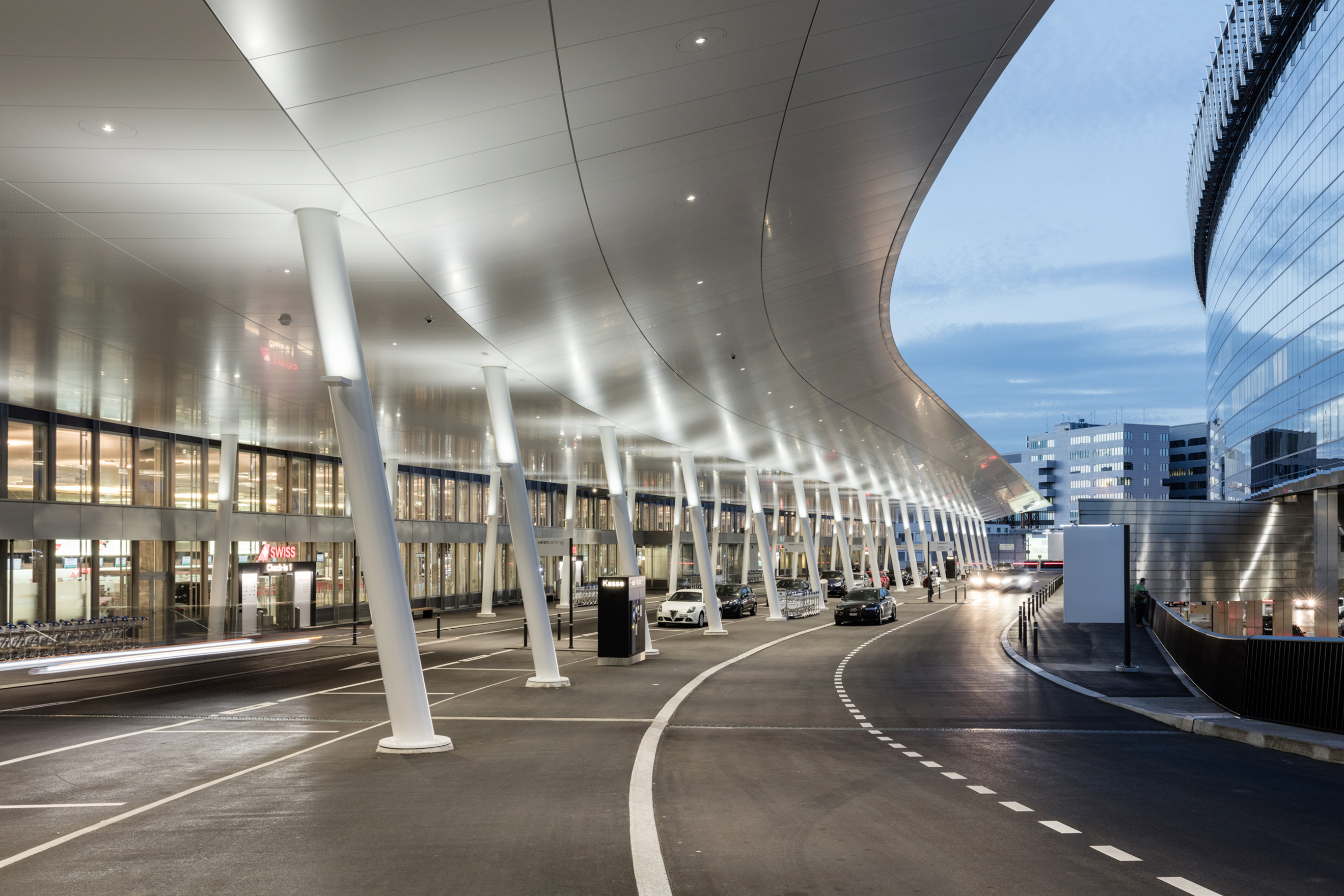
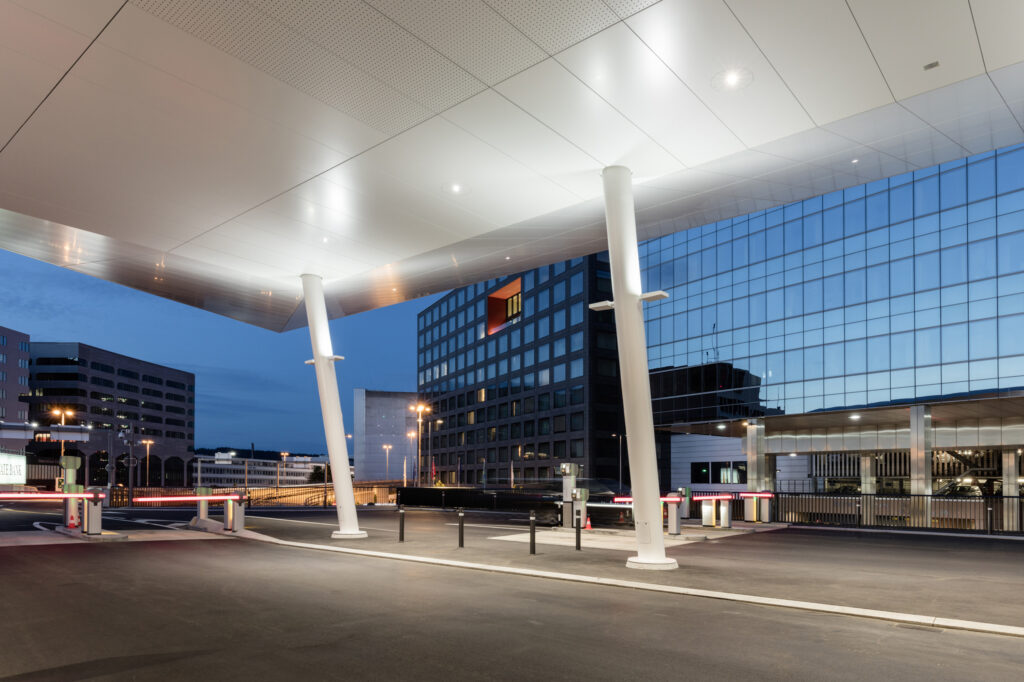
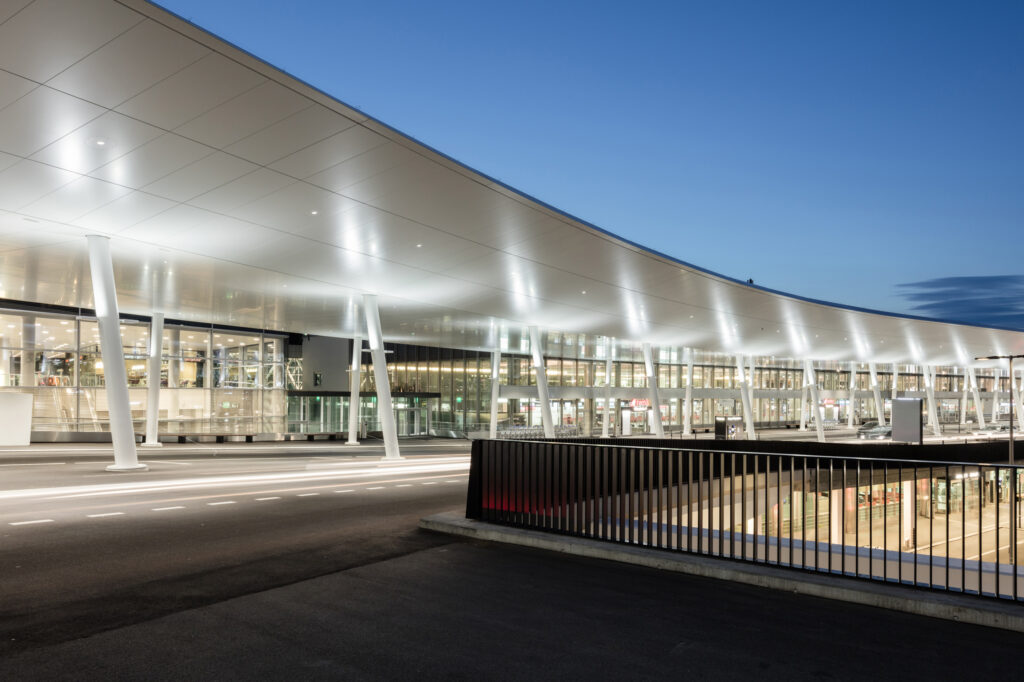
Whether it's the first or last impression, airport access roads shape the image people have of a city or country. At Zurich Airport—the largest in Switzerland—it is a 350-meter-long, visibly projecting, curved canopy that welcomes or bids farewell to travellers. Its shape evokes associations with the wings of airplanes and the vastness of travel to distant parts of the world.
Flughafen Zürich AG
2009–2016
Architecture
Beat Bühler
Infrastructure
Zurich, Schweiz
Competition
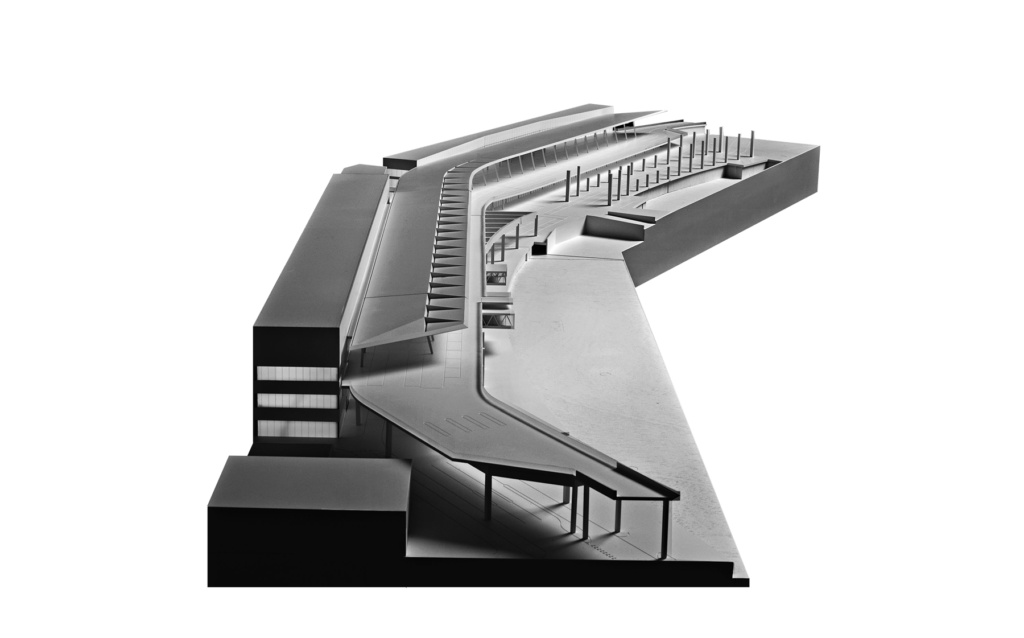
In 2008, Zurich Airport launched a competition for the redesign of its access roads, with the aim of improving the infrastructure of the area. A new traffic regime was required, the flow of vehicles had to be adjusted, and new marking and lighting systems had to be designed. In addition to these functional requirements, the new structure was also meant to strengthen the visual identity of the airport.
A Sign for Visual Identity
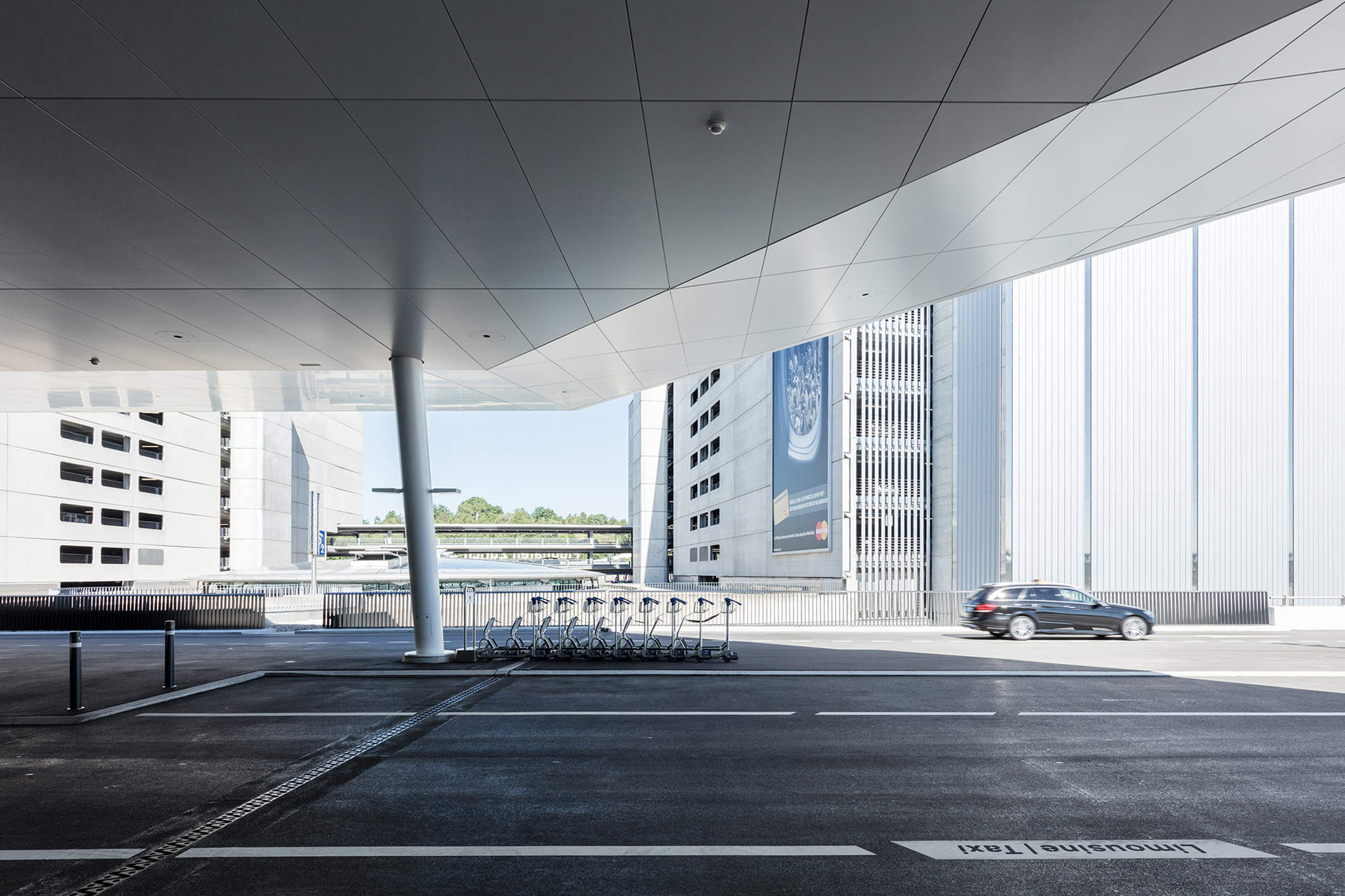
Burckhardt suggested a distinct landmark that integrates into the diverse conglomeration of the airport, whose visual identity it now shapes.
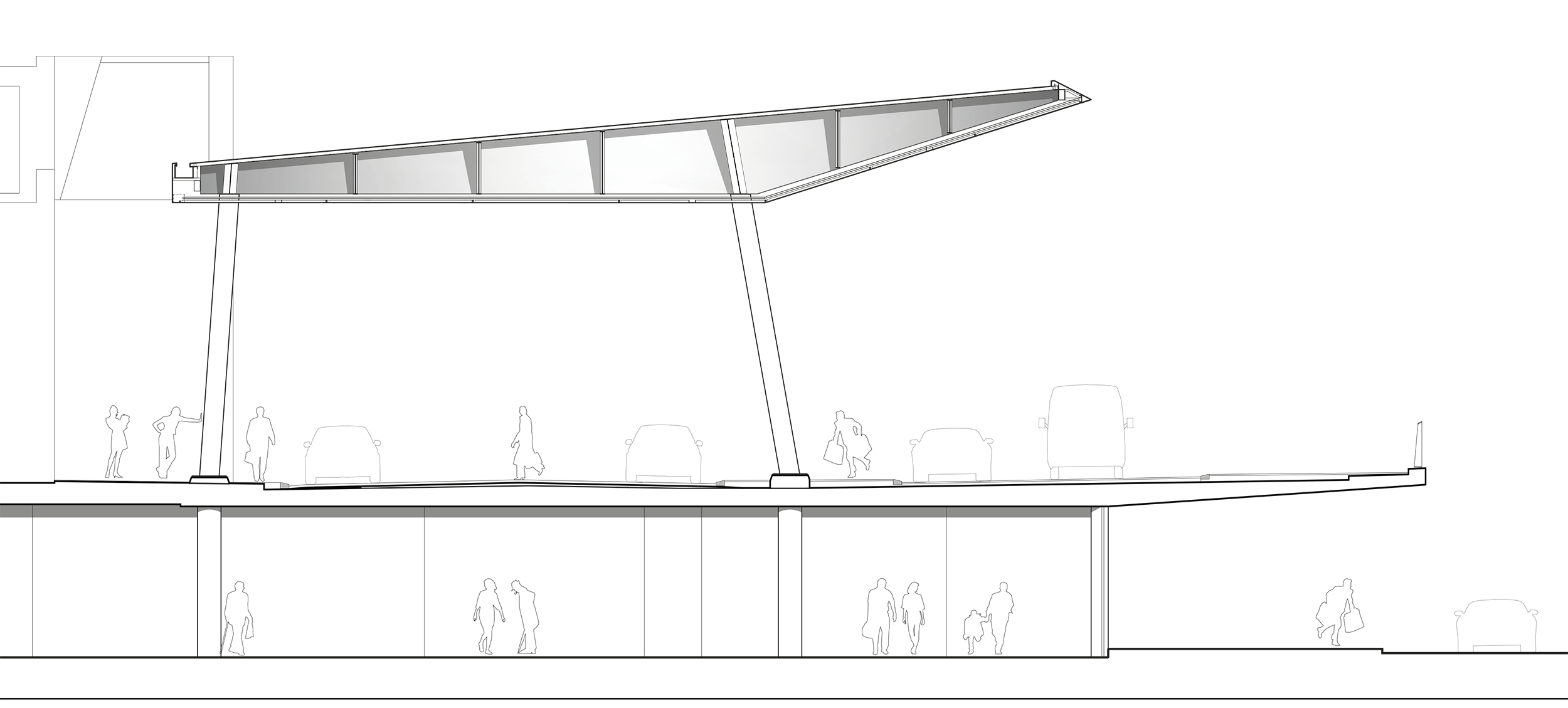
The canopy was designed with two different radiuses that connect tangentially to the roof edges of the terminal. It is constructed purely from steel, with double-supported frame trusses that cantilever out on the side facing away from the terminal. As the support grid corresponds to the structures below, no additional reinforcement was required.

A Means of Orientatioin
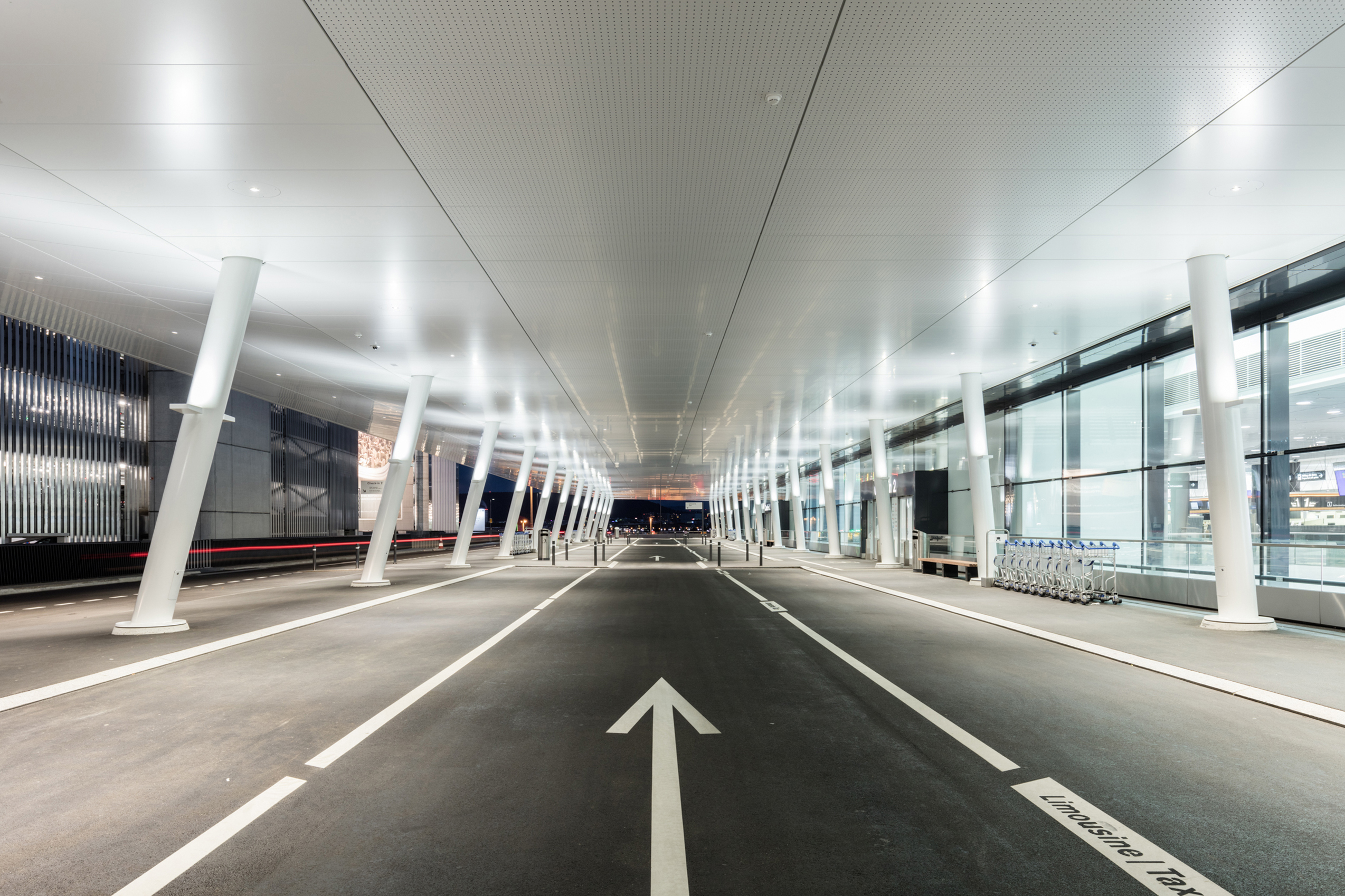
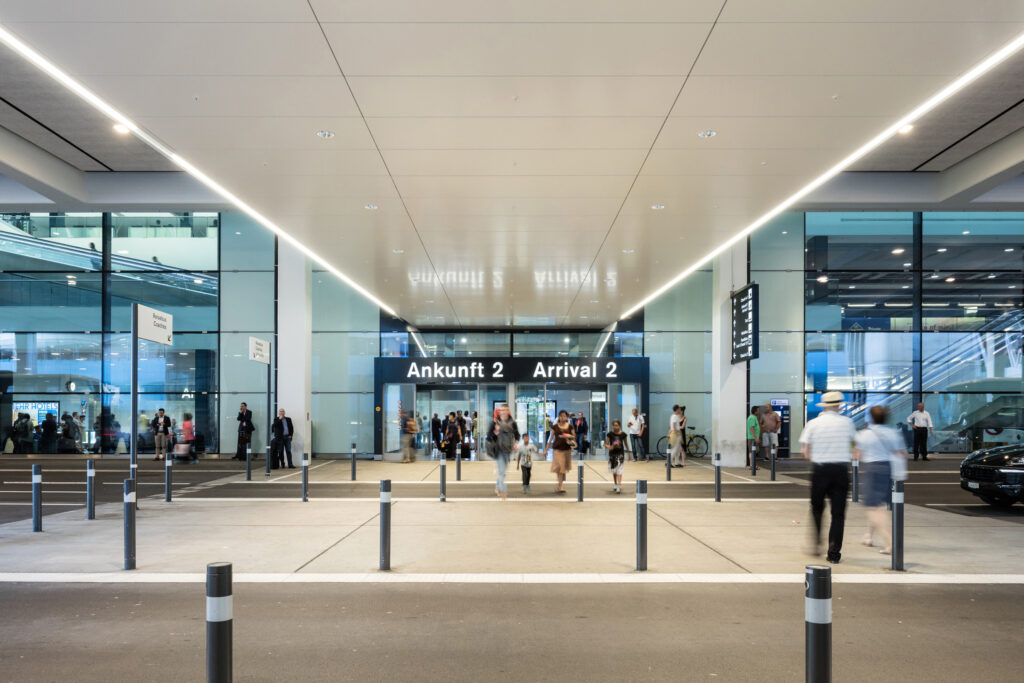
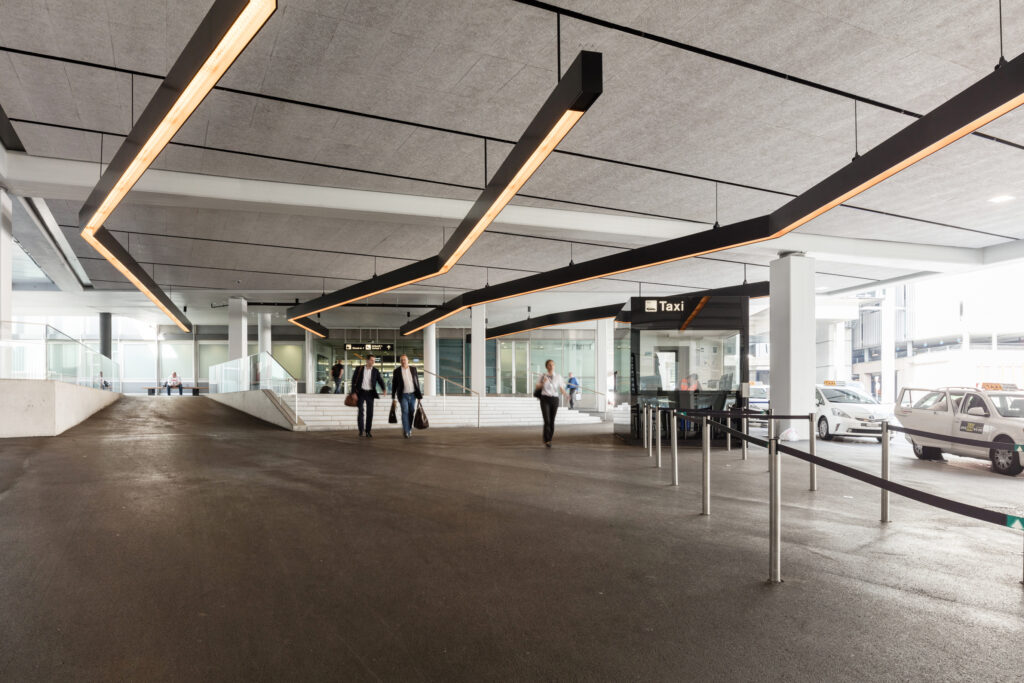
The canopy serves not only as a means of identification, but also as an orientation point for travellers, guests, and airport employees. Uniform road surfaces, clear markings on the traffic routes, and consistent signage ensure a smooth flow of people and vehicles, even during peak hours.
Lighting Concept
The lighting concept plays a key role in the redesign, especially on the arrivals level. During the day, the roof appears inviting and open, while clear signage ensures intuitive orientation. At night, it assumes two additional functions: as a direct light source, through discreet luminaires recessed into the smooth aluminium honeycomb soffit; and as an indirect reflector, softly diffusing the LED lighting from the supports back into the space. The result is a bright transit zone that encourages lingering through various street furniture and clear zoning.